
Table of Contents
- Why Graphic Print Quality Depends on Your Detergent Choice
- How to Wash Graphic Tees Without Ruining the Print
- How to Prevent Graphic Tee Fading and Cracking
- Air Drying vs. Machine Drying Graphic Tees
- Detergent Ingredients Explained: What Damages Prints
- Best Practices for Heavy-Weight and Premium Graphic Apparel
- Conclusion
Last Updated: August 28, 2026
Why Graphic Print Quality Depends on Your Detergent Choice
The best laundry detergent for printed shirts isn't just about getting clothes clean, it's about preserving the graphics themselves. At Nation Swag Designs, we understand how the wrong detergent can impact a perfectly good shirt. Screen-printed and DTG (direct-to-garment) designs are vulnerable to chemical breakdown, and most standard detergents accelerate that damage through harsh surfactants, enzymes, and optical brighteners.
Your graphic tees from Nation Swag Designs are built to last. They're made from quality fabrics like Gildan's 100% ring-spun cotton and Comfort Colors' heavyweight garment-dyed material. But even premium apparel fails when exposed to the wrong laundry chemicals. The ink bonding between the fabric and the print is delicate, it's not fused into the fibers the way dye is. It sits on top, held in place by the plastisol ink's adhesive properties. Aggressive detergents strip away that bond, causing the print to crack, peel, and fade.
Understanding what damages prints helps you make smarter choices. Most people grab whatever detergent is on sale, never considering whether it's actually compatible with graphic apparel. The result: cracking prints, fading colors, and a shirt that looks worn out after five or six washes instead of fifty.
How to Wash Graphic Tees Without Ruining the Print
Washing graphic tees correctly starts before you even open the detergent bottle. The entire process, water temperature, cycle selection, load size, and drying method, works together to either protect or destroy the print. Most people focus only on detergent and miss the bigger picture.
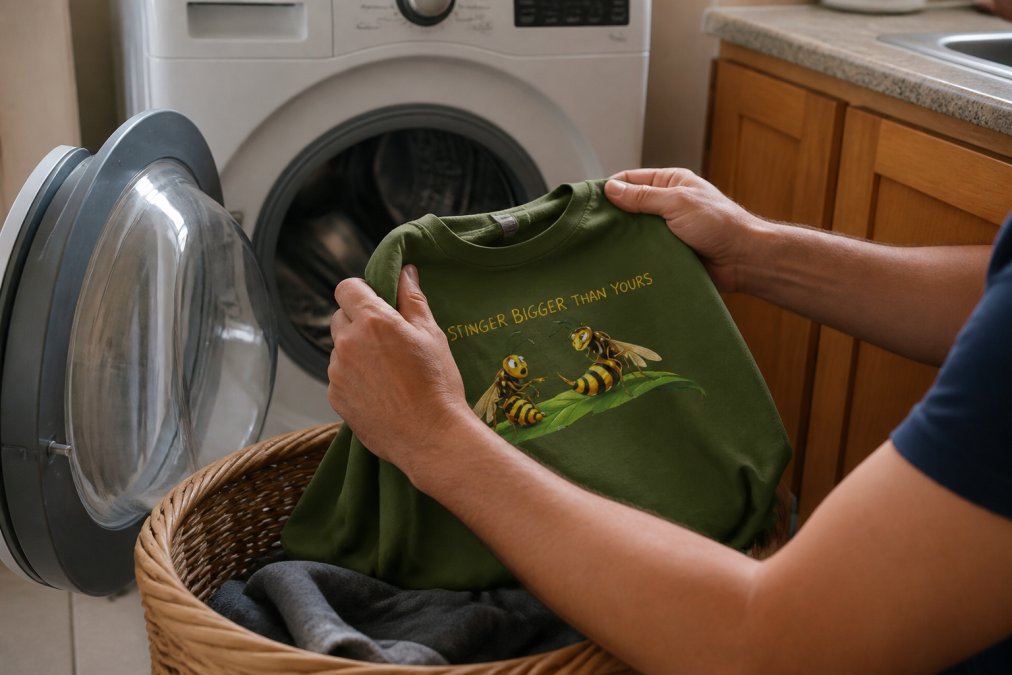
Cold Water Washing for Print Preservation
Cold water washing is non-negotiable for graphic apparel. Hot water accelerates chemical reactions that break down both the plastisol ink and the fabric's structural integrity (peer-reviewed research). Cold water cycles keep the ink stable and prevent the fibers from becoming brittle.
Run your graphic tees on a delicate or gentle cycle using cold water every single time. This reduces agitation and friction, two of the biggest threats to print durability. A standard or heavy-duty cycle creates too much mechanical stress on the fabric and ink, causing premature cracking and peeling.
Load size matters more than most people realize. Washing a single shirt in a full machine creates excessive movement and friction. Fill your washer only halfway when washing printed apparel. This gives the shirts room to move gently without constant contact with other garments or the drum itself.
Detergent Ingredients That Protect Screen-Printed and DTG Designs
Not all detergents are created equal, and the ingredient list tells the real story. A pH-neutral, enzyme-free formula is the baseline requirement for graphic apparel. Enzymes are designed to break down protein stains, but they also degrade the adhesive properties of plastisol ink (peer-reviewed research). Optical brighteners, those chemicals that make whites look brighter, chemically alter fabric dyes and can cause discoloration on printed designs (the FDA).
Look for detergents labeled as "color-safe" and "gentle." These formulations skip the harsh surfactants that strip away the ink's bonding agents. Mild surfactants clean effectively without the chemical aggression of standard detergents. The difference in print longevity can be significant, with shirts washed with gentle formulas maintaining their graphics longer than those washed with standard products.
Avoid fabric softeners entirely. They coat the fabric with a waxy residue that interferes with ink adhesion and can cause the print to crack or peel prematurely. The same goes for bleach and color-stripping agents. These chemicals are designed to break down color molecules, exactly what you don't want happening to your graphic prints.
Water hardness affects detergent performance more than most people realize. Hard water contains minerals that interfere with how detergents work, requiring more product to achieve the same cleaning power. This means more chemical residue left on your fabric. If you have hard water, consider using a water softener or switching to a detergent specifically formulated for hard water conditions.
How to Prevent Graphic Tee Fading and Cracking
Fading and cracking are the two most visible signs of print degradation. Both stem from the same root causes: excessive heat, harsh chemicals, mechanical stress, and UV exposure. Understanding the mechanics behind each helps you prevent them.
Cracking happens when the plastisol ink becomes brittle. This occurs when the ink is exposed to high heat repeatedly, when harsh detergents break down its chemical structure, or when excessive friction causes the ink to flex and split. Prevention requires controlling all three factors: use cold water, choose gentle detergents, and minimize agitation.
Fading results from color loss in the ink or underlying fabric. UV exposure from sunlight accelerates this process dramatically. Chemical degradation from detergent residue also causes fading. Unlike cracking, which is often irreversible, some fading can be slowed through proper care but not eliminated entirely over time.
Turning Shirts Inside Out During Washing
Turning your graphic tees inside out is a simple mechanical solution to a friction problem. The print sits on the outside of the fabric, making it the first surface to contact other garments, the washer drum, and agitation forces. By reversing the shirt, you create a barrier that protects the print from direct friction.
This technique works best when combined with a gentle cycle and reduced load size. The three strategies together, inside-out washing, cold water, and delicate cycles, form the foundation of print preservation. You'll notice the difference within the first few washes: prints remain vibrant and intact instead of showing early signs of wear.
Avoiding Fabric Softeners and Harsh Chemicals
Fabric softeners are among the worst choices for graphic apparel. They work by coating fibers with a silicone-based or wax-based layer that makes clothes feel soft. This coating also prevents the ink from bonding properly to the fabric. Over time, this leads to print peeling and cracking as the ink loses its grip on the underlying material.
Bleach and oxygen-based stain removers are equally damaging. These products break down color molecules chemically. While they're effective at removing stains, they also damage the dyes in the fabric and the pigments in the print itself. For stained graphic apparel, use a gentle stain pretreatment designed for delicate fabrics. Apply it directly to the stain, let it sit for 15-20 minutes, then wash with cold water and a gentle detergent.
Enzymes in standard laundry detergents pose a specific threat to plastisol ink. These proteins are designed to break down organic matter, including the adhesive compounds that hold the print to the fabric. Enzyme-free detergents eliminate this risk entirely.
Air Drying vs. Machine Drying Graphic Tees
The drying method you choose has as much impact on print longevity as the washing method. Heat is one of the primary enemies of graphic prints. Machine dryers subject shirts to sustained high temperatures that cause plastisol ink to become brittle and lose flexibility. This brittleness leads to cracking and peeling over time.
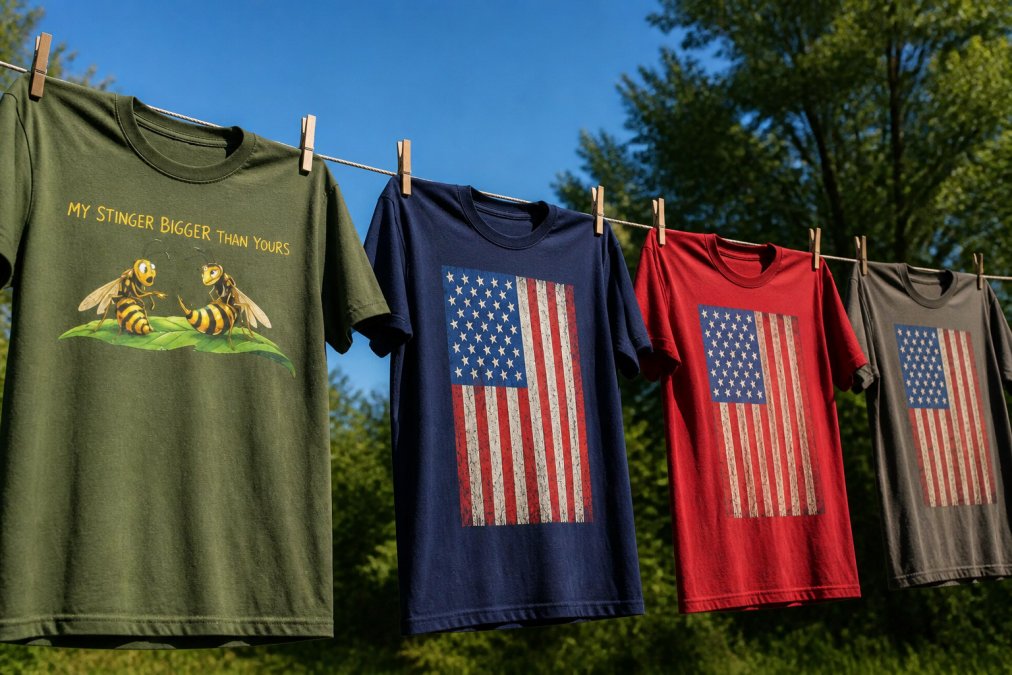
Air drying eliminates the heat problem entirely. Hang your graphic tees on a clothesline or drying rack in a shaded area. Direct sunlight can fade prints over time, so avoid sun exposure during the drying process. Shade-dried shirts maintain their color and ink integrity far better than machine-dried ones.
If you must use a machine dryer, use the lowest heat setting available, typically labeled as "delicate," "low," or "air dry." Run the cycle for the minimum time needed to dry the shirt. Remove it while it's still slightly damp rather than bone-dry. This reduces the total heat exposure and preserves the ink's flexibility.
The tumble action in machine dryers also creates friction that can damage prints. Air drying eliminates this mechanical stress entirely. For graphic apparel, air drying isn't just preferable, it's the clear best practice for maximum print longevity.
Detergent Ingredients Explained: What Damages Prints
Understanding detergent chemistry helps you make informed choices about which products protect your graphic tees. Standard laundry detergents contain several categories of ingredients, and each one poses risks to printed apparel.
Surfactants are the primary cleaning agents in detergent. They break down the surface tension of water and help lift dirt from fabric. However, harsh surfactants are too aggressive for graphic prints. They strip away the adhesive properties of plastisol ink and can cause the print to separate from the fabric. Mild surfactants, by contrast, clean effectively without this chemical aggression.
Builders are compounds that soften water and help surfactants work more effectively. Phosphates were once common builders but are now restricted in many areas. Modern builders like zeolites and citrates are gentler but still present in most standard detergents. Enzyme-free detergents skip these altogether.
Optical brighteners are fluorescent compounds that make whites appear brighter by absorbing UV light and re-emitting it as visible light. This creates an illusion of brightness. However, these compounds chemically interact with fabric dyes and can cause discoloration or fading on printed designs. They're particularly problematic for colored prints.
Bleach and oxygen-based cleaners break down color molecules through oxidation. This is why they're effective at stain removal, they literally destroy the stain's color. Unfortunately, they also destroy the color in your graphic print. Never use bleach on printed apparel.
Fragrance compounds in detergents are often derived from harsh chemicals. While they smell pleasant, they can interact with inks and dyes. Fragrance-free detergents eliminate this risk entirely.
A comparison of what to look for versus what to avoid:
| Ingredient Type | Avoid | Seek Out |
|---|---|---|
| Surfactants | Harsh, anionic surfactants | Mild, plant-based surfactants |
| Enzymes | Protease, amylase enzymes | Enzyme-free formulas |
| Brighteners | Optical brighteners, fluorescents | None, avoid entirely |
| Bleach | Chlorine bleach, oxygen bleach | Stain pretreatment only |
| Water softeners | Phosphates, heavy builders | Citrates, natural alternatives |
| Additives | Fabric softener, fragrance | Minimal additives |
Best Practices for Heavy-Weight and Premium Graphic Apparel
Heavy-weight apparel like the Gildan 5000 and Comfort Colors 1717 garment-dyed tees from Nation Swag Designs require slightly different care than lighter fabrics. These premium shirts are built for durability, but that durability extends only when you wash and dry them correctly.
Heavy-weight cotton fabrics have more structural integrity than lighter blends, which means they can handle slightly more agitation without damage. However, the graphic print itself is just as vulnerable. The added weight of the fabric doesn't protect the ink, it only means the shirt itself lasts longer.
For heavy-weight graphic tees, the same cold water, gentle cycle, inside-out approach applies. The difference is in load size: you can wash slightly more heavy-weight shirts together than lighter ones, but still avoid overloading. A half-full washer is still the target.
Pre-shrunk cotton fabrics like those used in Nation Swag Designs apparel are treated to minimize shrinkage. However, repeated washing can still cause slight shrinkage if you use hot water or high heat drying. Cold water and air drying prevent this entirely. Your shirts will maintain their fit through dozens of washes.
Premium garment-dyed fabrics have color built into the fiber itself rather than applied to the surface. This means the fabric color is more stable than printed designs. However, the graphic print still requires the same careful handling. The combination of stable fabric color and well-preserved graphics creates apparel that looks new for years.
Your graphic tees represent more than just clothing, they're an expression of identity. Whether you're wearing a patriotic design, faith-based graphic, or tactical-inspired tee, protecting that design should be a priority. The best laundry detergent for printed shirts is one that's pH-neutral, enzyme-free, and specifically formulated for delicate fabrics. Combined with cold water washing, gentle cycles, inside-out turning, and air drying, you'll keep your graphics vibrant and intact.
Nation Swag Designs offers premium apparel built from trusted brands like Gildan and Comfort Colors precisely because we know our customers demand quality that lasts. Apply these care practices to your Nation Swag Designs collection, and you'll preserve those meaningful graphics through countless wears. Start with a gentle, color-safe detergent, commit to cold water and delicate cycles, and let air drying do the final work. Your investment in quality apparel deserves nothing less.
Frequently Asked Questions
Q: What is the best way to wash printed t-shirts?
A: Wash printed shirts in cold water on a delicate cycle, turning them inside out first. Use a pH-neutral, enzyme-free detergent without fabric softener. Avoid overloading the washer, as agitation and friction damage ink bonding. Wash with similar colors to prevent dye transfer. Air dry flat or hang-dry instead of machine drying, which causes excessive heat and tumbling that cracks and peels screen-printed and DTG designs.
Q: Does fabric softener damage screen-printed designs?
A: Yes. Fabric softeners contain chemicals that coat fibers and break down the adhesive bond between plastisol ink and fabric. They also leave detergent residue that accelerates fading and causes peeling. For printed apparel, skip fabric softener entirely. If you need softness, use a gentle rinse cycle with extra water to remove all detergent residue, which naturally softens the fabric over time.
Q: How to prevent graphic tee fading when washing?
A: Cold water washing is critical, heat accelerates chemical degradation of ink. Use a mild, pH-neutral detergent and wash inside out to shield the print from friction. Avoid bleach and enzyme-based cleaners, which chemically degrade the ink. Wash less frequently and with smaller load sizes to reduce agitation. Air dry completely; machine drying's heat and tumbling cause fading and cracking. Heavy-weight cotton tees like the Gildan 5000 can help protect ink bonding.
Q: Is cold water necessary for washing printed apparel?
A: Yes. Cold water prevents heat-induced chemical breakdown of both plastisol and water-based inks. Warm or hot water accelerates ink degradation and increases the risk of peeling and fading. Cold water also reduces fiber abrasion and helps preserve the fabric integrity of your printed shirt. Pair cold water with a delicate or gentle cycle for maximum print longevity.
This article was written using GrandRanker