
Table of Contents
- What Makes Graphic Apparel Durable
- T-Shirt Fabric Weight Guide: Why GSM Matters
- Screen Printing vs DTG Durability: Which Lasts Longer
- Cotton Quality: Ring-Spun, Combed, and Blends
- Construction Details That Extend Garment Life
- How to Wash Graphic Tees Correctly
- Identifying Quality in Product Descriptions
Last Updated: August 27, 2026
What Makes Graphic Apparel Durable
Durability in graphic apparel comes down to three interconnected factors: the base fabric itself, how the graphic is applied, and how well the garment is constructed. When these elements work together, you get a shirt that looks sharp after dozens of washes instead of one that cracks, fades, or falls apart.
Most people focus solely on the graphic when evaluating durability. They'll look at whether the print feels stiff or flexible, then make a purchase decision. What they're missing is that the foundation matters just as much. A premium graphic printed on cheap fabric will fail. Conversely, exceptional fabric with poor print application will disappoint just as quickly.
At Nation Swag Designs, we've built our reputation on understanding this balance. Our Heavyweight Unisex Crewneck T-shirts from Gildan use 100% cotton construction with reinforced stitching specifically designed to hold up to regular wear and washing. The fabric weight, the ink chemistry, the stitch density, these aren't afterthoughts. They're the difference between apparel that lasts a season and apparel that becomes a wardrobe staple.
The durability equation looks like this: heavier fabric + quality construction + proper printing technique + correct care = graphic apparel that stays vibrant and intact for years. Skip any one of these components, and your investment suffers.
T-Shirt Fabric Weight Guide: Why GSM Matters
GSM stands for grams per square meter, and it's the most reliable indicator of how substantial a t-shirt actually is. This metric directly correlates with durability because heavier fabric simply withstands more stress from washing, wearing, and regular use.
Standard lightweight t-shirts typically run 4.5 to 5.5 ounces, which translates to roughly 150-180 GSM (astm.org). These feel thin when you hold them and tend to wear through faster, especially around high-friction areas like the collar and sleeve seams. Mid-weight shirts fall in the 5.5 to 6.5 ounce range (180-210 GSM), offering a noticeable improvement in durability while remaining comfortable for everyday wear. Heavyweight shirts, the gold standard for durability, weigh 6.5 ounces or more (210+ GSM). These feel substantial in your hands and maintain their structure wash after wash.
The relationship between weight and longevity isn't linear, a 7-ounce shirt doesn't just last 40% longer than a 5-ounce shirt. Heavier fabric resists pilling, maintains shape better, and provides superior protection for printed graphics. When fabric is denser, the fibers are tightly packed, which means less movement and stress on the graphic itself during the wash cycle.
Nation Swag Designs sources exclusively from Gildan and Bella + Canvas, both of which offer heavyweight options. The Gildan 5000 crewneck, available at https://nationswagdesigns.com/products/heavyweight-unisex-crewneck-t-shirt-gildan®-5000, weighs a full 6 ounces and uses preshrunk jersey knit construction. This weight class strikes the ideal balance between durability and wearability, substantial enough to last, comfortable enough to wear daily.
Screen Printing vs DTG Durability: Which Lasts Longer
Screen printing and direct-to-garment (DTG) printing are the two dominant methods for applying graphics to apparel, and they deliver vastly different durability profiles.
Screen printing uses plastisol ink, a thick, opaque ink that sits on top of the fabric rather than soaking into it. The process involves pushing ink through a mesh screen onto the garment. Once cured, the ink forms a durable layer that resists fading and cracking remarkably well. The downside is that screen printing creates a raised, slightly stiff feel where the graphic is applied. For simple designs with solid colors, this method is nearly unbeatable in terms of longevity.
DTG printing works more like an inkjet printer, spraying water-based ink directly onto the fabric. This method excels at producing detailed, photographic graphics with unlimited color variation. The ink soaks into the fibers rather than sitting on top, creating a softer hand feel. However, water-based inks are more susceptible to fading, especially when exposed to sunlight or frequent washing. DTG graphics can develop a washed-out appearance after 30-50 washes, whereas screen-printed graphics often remain vibrant for 100+ washes.
The durability difference becomes obvious when you compare graphic retention. Screen printing's plastisol ink bonds with the fabric surface through heat curing, creating mechanical adhesion that resists cracking. DTG's water-based ink relies on absorption, which means it's more vulnerable to color degradation over time.
For patriotic and tactical graphics where visual impact matters, screen printing remains the superior choice. The ink sits prominently on the fabric, colors stay true, and the graphic maintains its definition through years of wear.
Cotton Quality: Ring-Spun, Combed, and Blends
The type of cotton used in your graphic apparel dramatically affects how the garment behaves over time. Not all cotton is created equal, and understanding the differences helps you identify products built to last.
Ring-spun cotton is produced by twisting short fibers together to create a longer, stronger yarn. This process takes more time and effort than standard spinning, which is why ring-spun cotton commands a premium. The result is yarn with superior tensile strength, it resists breaking under stress. Garments made from ring-spun cotton feel smoother, hold their shape better through multiple washes, and resist pilling. The fibers are tightly twisted, which means less fuzzing and a cleaner appearance over time.
Combed cotton goes through an additional processing step where short fibers and impurities are removed before spinning. This creates a finer, more uniform yarn that produces softer fabric with improved color retention. Combed cotton resists fading better than standard cotton because the fibers are more consistent and accept dyes more evenly.
Blends mixing cotton with polyester offer different trade-offs. A 50/50 or 60/40 cotton-polyester blend reduces shrinkage and improves wrinkle resistance, but it sacrifices breathability and comfort. For graphic apparel, blends are generally inferior to pure cotton because polyester can trap moisture and the synthetic fibers don't age as gracefully as cotton.
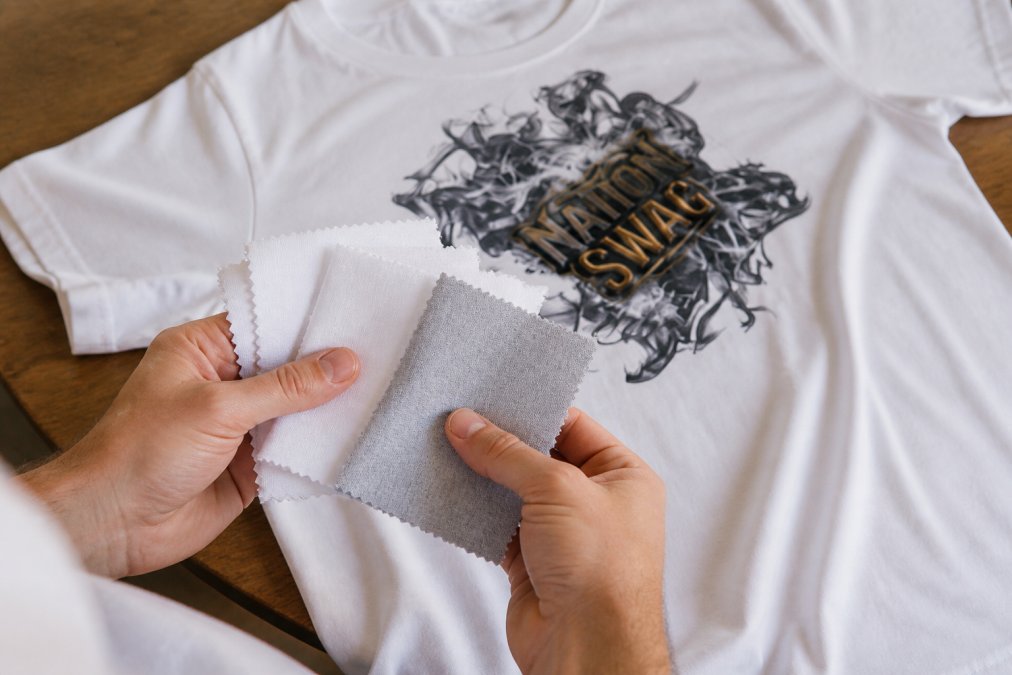
The Gildan 5000 shirts used by Nation Swag Designs specify Airlume combed and ring-spun cotton in their Ash Grey colorway, combining both premium processing methods. This dual-processing approach means the fabric resists pilling, holds color, and maintains softness through repeated washing.
Construction Details That Extend Garment Life
Beyond fabric weight and fiber quality, the way a shirt is actually constructed determines whether seams will hold and hems will stay flat through years of wear.
Seam construction is where cheap apparel fails first. Single-needle stitching is fast and economical but leaves seams vulnerable to stress. Double-needle stitching, where two parallel lines of thread run along the seam, creates redundancy, if one thread breaks, the seam stays intact. This is the standard in durable apparel. Triple-needle stitching, found on premium items, adds even more security.
Stitch density matters significantly. Measured in stitches per inch (SPI), higher density means more thread holding the seam together. Apparel with 8-10 SPI along the side seams will outlast items with 5-6 SPI (astm.org). When you examine a seam closely, you should see tight, consistent stitching with no gaps.
Taped neck and shoulders are a hallmark of durability-focused design. Tape reinforces these high-stress areas, preventing the collar from stretching out and the shoulder seams from tearing. This detail adds minimal cost but extends garment life substantially. Seamless construction in the collar and body reduces stress points, though it's more expensive to produce.
Tubular construction, where the body is knitted as a tube rather than flat panels that are sewn together, eliminates side seams entirely. This reduces stress points and creates a more durable garment overall. Brands that use tubular construction typically highlight it because it's a meaningful durability feature.
The Nation Swag Designs Heavyweight Crewneck includes double-needle sleeve and bottom hems, plus taped neck and shoulders. These construction details are why the shirt holds up through heavy use, the reinforcement is built in from the factory.
How to Wash Graphic Tees Correctly
Even the most durable graphic apparel will fail prematurely if washed incorrectly. The washing machine is the biggest threat to graphic longevity, not normal wear.
Turn the shirt inside out before washing. This single step dramatically reduces graphic degradation because it minimizes direct contact between the printed area and the agitation of the wash cycle. The inside of the shirt faces the friction; the graphic faces inward, protected.

Use cold water exclusively. Hot water accelerates color fading and can cause shrinkage, even in preshrunk fabric. Cold water is gentler on both the fabric and the graphic ink. The temperature difference is substantial, hot water washing can reduce graphic lifespan by 30-40%.
Wash in a gentle or delicate cycle rather than normal or heavy duty. Gentle cycles use less agitation, which means less stress on seams and graphics. Heavy agitation cycles are designed for towels and work clothes, not apparel with printed graphics.
Avoid fabric softener and bleach entirely. Fabric softener coats fibers with chemicals that degrade ink adhesion over time. Bleach will fade or discolor graphics, especially on darker apparel. If you need to brighten whites, use oxygen-based cleaners instead.
Dry on low heat or air dry. High heat in the dryer accelerates fading and can cause shrinkage. Air drying is ideal but takes longer. If you use a dryer, low heat and remove the shirt while still slightly damp to prevent heat damage to the graphic.
Wash graphic tees less frequently than other apparel. If the shirt isn't visibly soiled, skip the wash. Fewer wash cycles directly correlates with longer graphic life. This is the simplest durability hack available, wear it multiple times before washing.
Identifying Quality in Product Descriptions
When shopping for durable graphic apparel, the product description tells you whether the manufacturer invested in quality or cut corners.
Look for specific fabric specifications. A quality description will list fiber content (100% cotton or specific blend ratio), weight in ounces or GSM, and processing method (ring-spun, combed, preshrunk). Vague descriptions like "soft cotton blend" or "premium fabric" are red flags, manufacturers that care about quality give you the details.
Check for construction details. Phrases like "double-needle stitching," "taped neck and shoulders," "seamless collar," or "reinforced seams" indicate durability focus. If the description says nothing about construction, the garment was likely made with standard methods that prioritize cost over longevity.
Examine the printing method. Screen printing should be mentioned explicitly. If the description doesn't specify, it's likely DTG, which means expect fading sooner. Quality manufacturers are transparent about their printing process because they know customers value durability.
Look for preshrunk fabric notation. Preshrinking means the fabric has already been through a controlled shrinkage process, so your shirt won't shrink unexpectedly after the first wash. This detail matters because shrinkage compromises fit and can damage graphics.
Product descriptions from Nation Swag Designs specify all these elements. The Heavyweight Crewneck lists 100% cotton (preshrunk jersey knit), double-needle construction, and taped reinforcement. This transparency reflects confidence in the product, if quality was questionable, these details would be vague or absent.
When a description is sparse or uses marketing language instead of specifications, the manufacturer is hiding something. Your job is to read between the lines and demand transparency. Durable apparel sells itself through specifications, not flowery language.
Choosing durable graphic apparel requires understanding fabric weight, construction methods, printing techniques, and proper care. The investment in quality pays dividends through years of wear. Nation Swag Designs sources from Gildan and Bella + Canvas specifically because these manufacturers prioritize durability at every stage, from fiber selection through final construction. When you purchase apparel with heavyweight fabric, double-needle stitching, and screen-printed graphics, you're buying a garment that will outlast cheaper alternatives by years. Start with the Gildan fabric quality standards to understand what separates premium construction from standard production, then apply these durability principles to every graphic apparel purchase you make.
| Durability Factor | What to Look For | Impact on Lifespan |
|---|---|---|
| Fabric Weight | 6+ ounces (210+ GSM) | Heavier fabric resists wear and maintains shape |
| Fiber Type | Ring-spun or combed cotton | Superior tensile strength and color retention |
| Printing Method | Screen printing with plastisol ink | Resists fading and cracking through 100+ washes |
| Construction | Double-needle seams, taped reinforcement | Prevents seam failure and collar stretching |
| Care Method | Cold water, gentle cycle, inside out | Extends graphic life by 30-40% |
Frequently Asked Questions
What fabric is best for durable graphic apparel?
Ring-spun and combed cotton offer the best durability for graphic apparel. Ring-spun cotton undergoes an extra twist during processing, creating stronger fibers that resist pilling and wear. Combed cotton removes short fibers that weaken fabric. Look for 100% preshrunk cotton or cotton-blend options with at least 90% cotton content. Heavyweight options (5.5-6 oz per square yard or higher GSM) combined with quality cotton provide the longest lifespan for graphic tees.
How can you tell if a screen print will last?
Quality screen prints use plastisol or water-based inks with proper adhesion to the fabric. Check product descriptions for ink type and application method. The graphic should feel slightly raised and flexible, not stiff or cracking at the edges. Look for mentions of curing temperature and pressure settings, which indicate professional application. Avoid prints that feel plastic-like or show visible gaps between ink and fabric. Brands that specify their printing standards typically deliver better print adhesion and colorfastness.
Does the weight of a t-shirt affect its durability?
Yes, significantly. Heavier fabrics (measured in GSM or ounces per square yard) resist wear, pilling, and fading better than lightweight options. Heavyweight apparel typically ranges from 5.5 to 6.5 ounces per square yard. The increased fabric density means more fiber per square inch, which translates to longer garment life. Lightweight shirts (under 4.5 oz) may feel comfortable but wear faster and show graphic cracking sooner. For durable graphic apparel, prioritize heavyweight construction paired with quality cotton.
How do I prevent graphic tees from cracking and fading?
Wash graphic tees inside out in cold water to protect the print surface. Use gentle or delicate cycles, avoid high heat, and skip the dryer when possible, air drying extends both fabric and print life. Wash with similar colors to prevent dye transfer. Limit washing frequency by spot-cleaning minor stains. Screen-printed graphics last longer than DTG prints when properly cared for. Quality inks with high colorfastness ratings resist fading. Turning the garment inside out during washing is the single most effective prevention method.
This article was written using GrandRanker