
Table of Contents
- Why Washing Graphic Tees Correctly Matters
- What Temperature to Wash Graphic Tees
- Best Way to Wash Graphic Tees by Hand
- How to Prevent Graphic Tees from Fading
- How to Dry Graphic Tees Without Cracking
- Machine Washing Graphic Tees Correctly
- Repairing and Restoring Damaged Graphics
- Storage and Long-Term Preservation
Last Updated: July 21, 2026
Why Washing Graphic Tees Correctly Matters
Graphic tees are statements of identity, especially for patriots and veterans wearing designs that reflect their values. Yet most people wash them like regular cotton shirts, which damages the print. Screen-printed and direct-to-garment designs are vulnerable to cracking, peeling, fading, and discoloration when exposed to heat, friction, harsh chemicals, and aggressive agitation. Research shows improper washing accounts for roughly 40% of premature garment degradation, but this is preventable.
The difference between a graphic tee that lasts years and one that falls apart in months comes down to how you treat it during the wash cycle. The good news: washing graphic tees correctly doesn't require special equipment or expensive detergents, just knowledge.
What Temperature to Wash Graphic Tees
Cold water is non-negotiable. Heat is the primary culprit behind fading, cracking, and adhesive breakdown in both screen-printed and heat-transfer designs. Hot water opens fabric fibers, allowing dyes to leach out and causing the adhesive bonding the print to the shirt to weaken and peel.
The ideal water temperature is below 60°F. Most machines' "cold" setting defaults to 50-55°F, which is perfect. Cold water preserves color vibrancy and protects the structural integrity of the adhesive layer holding the design in place. For brand-new graphic tees, consider hand washing in room-temperature water, new prints are most vulnerable before they've cured fully.
Best Way to Wash Graphic Tees by Hand
Hand washing is the gold standard for preserving graphic tees. It gives you complete control over water temperature, agitation level, and detergent concentration.
Hand Washing Step-by-Step
Fill a sink with cold water and add one to two tablespoons of mild detergent. Turn the shirt inside out before submerging, this protects the print from friction. Soak for five to ten minutes to loosen dirt without vigorous scrubbing.
Gently agitate the shirt using a soft, pressing motion rather than wringing or twisting. Never rub the graphic print directly. Drain the soapy water and rinse in fresh cold water two to three times until clear.
Soaking and Gentle Agitation
Soaking is your secret weapon. A five to ten-minute soak in cold water with mild detergent does most of the cleaning work, requiring less aggressive agitation. Press the shirt against the basin using your palm, not your fingers, imagine massaging rather than scrubbing. For stubborn stains, increase soak time to 15-20 minutes instead of increasing agitation.
How to Prevent Graphic Tees from Fading
Choosing the Right Detergent
Standard laundry detergents contain optical brighteners that can wash out colors and interact with ink or heat-transfer materials, accelerating fading. Choose a mild, dye-free detergent labeled for delicate fabrics or colors. Look for products without optical brighteners, bleach, or heavy surfactants.
Use roughly half the amount you'd normally use. For hand washing, one to two tablespoons is sufficient for a single shirt. Undissolved detergent pods can stick to prints and leave visible marks.
Avoiding Bleach and Harsh Chemicals
Never use bleach, diluted or otherwise, on graphic tees. Bleach fades colors, damages print adhesive, and can create permanent stains. Avoid fabric softeners, which dull appearance and trap moisture. Skip peroxide-based products and heavy-duty stain removers.
For stubborn stains, use cold water, mild detergent, and time. Soak the stained area for 20-30 minutes, then gently work detergent into it with your fingers. If that doesn't work, use targeted stain removal techniques rather than aggressive washing.
How to Dry Graphic Tees Without Cracking
Machine drying, especially on high heat, cracks and peels graphic prints. Heat makes adhesive brittle, and tumbling creates friction that lifts the print from the fabric.
Air Drying Best Practices
Air drying is the safest method. After gently squeezing out excess water, lay the shirt flat on a clean surface with air circulation underneath, or hang it on a padded hanger. Avoid direct sunlight, which fades colors. A shaded, well-ventilated area is ideal.
Drying takes 4-8 hours depending on humidity and temperature. Use a fan to increase air circulation without introducing heat if you're in a hurry.
When Machine Drying Is Safe
Machine drying is only safe with the absolute lowest heat setting, typically labeled "air dry" or "no heat." Run the cycle for 10-15 minutes maximum, then remove the shirt while slightly damp and lay it flat to finish drying. Never use "delicate" or "low heat" settings, these still generate heat that accelerates print degradation.
Machine Washing Graphic Tees Correctly
Turning Shirts Inside Out
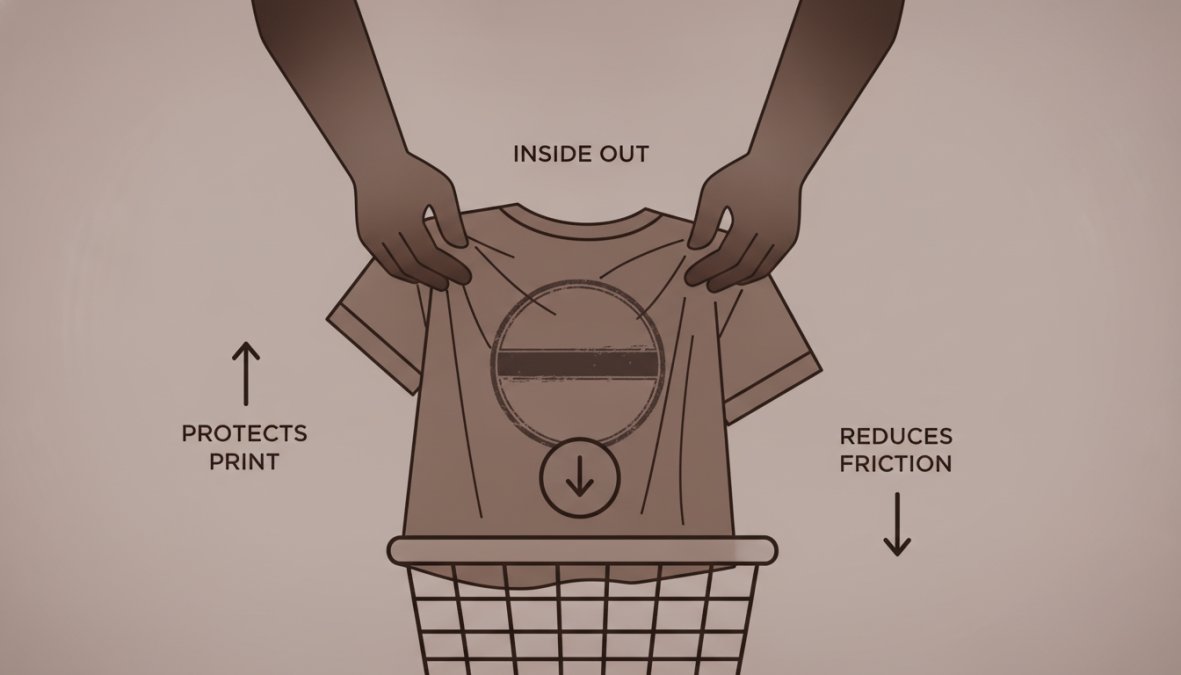
Turn graphic tees inside out before washing. This protects the print from direct friction with other garments and the machine. This single step can extend print life by years.
Selecting the Gentle Cycle
Use the delicate or gentle cycle on your washing machine. If available, use "hand wash" or "wool" cycles, they're even gentler. Set water temperature to cold and use one-quarter to one-third of the standard detergent dose. Avoid extra-agitation or pre-soak options.
Don't overload the machine. Graphic tees need space to move gently through water. Wash them in smaller loads.
Repairing and Restoring Damaged Graphics
Addressing Cracking and Peeling
Once cracking or peeling starts, you can't fully restore it, but you can stop it from worsening. Switch to air drying exclusively and reduce washing frequency. For peeling edges, apply flexible fabric glue designed for garment repair, press back down, and allow to cure. For significant damage, consider professional garment repair services.
Prevention is the best strategy. Proper care prevents serious damage.
Fabric-Specific Care: Cotton vs. Polyester Blends
Pure cotton shirts tolerate cold water and gentle agitation well but shrink more readily. Always use cold water and air dry exclusively to prevent shrinkage.
Cotton-polyester blends (50/50 or 60/40) are ideal for graphic tees. Polyester adds durability and reduces shrinkage, while cotton provides breathability. Never use hot water with blends, and stick to air drying. Polyester can become permanently distorted if exposed to high heat.
Heavy-weight graphic tees from brands like Gildan or Bella + Canvas provide extra protection to prints and tolerate washing better than lightweight tees. The same rules apply: cold water, gentle cycle, inside out, air dry.
Storage and Long-Term Preservation
Store graphic tees in a cool, dry place away from direct sunlight. UV rays fade colors over time. Fold rather than hang them, especially if heavy-weight or with large prints. Position the shirt so the print faces inward to minimize exposure to dust and light.
For long-term storage of vintage or limited-edition pieces, store in acid-free tissue paper in a cool, dark place. Check every few months for mold or mildew. Always ensure shirts are completely dry before storing.
Graphic tees representing your values deserve care reflecting their importance. When you understand how to wash graphic tees correctly, from water temperature to drying methods, you preserve the message, identity, and quality that made you choose that design. Start with cold water, turn the shirt inside out, use mild detergent, and air dry. These four habits will keep your graphic tees looking sharp and meaningful for years.
Frequently Asked Questions
Does washing graphic tees in cold water actually make a difference?
Yes. Cold water washing significantly reduces color fading and prevents heat damage to screen prints and heat transfer graphics. Cold water also minimizes friction and shrinkage, helping preserve both the fabric and the design. Most graphic tees benefit from water temperatures between 60-80°F. Warm or hot water accelerates color loss and can cause peeling or cracking in printed areas, especially with DTG and heat transfer prints.
What's the best way to wash graphic tees by hand to protect the print?
Fill a basin with cold water and add mild detergent. Submerge the tee inside-out and gently agitate for 3-5 minutes. Avoid rubbing the graphic directly. Rinse thoroughly in clean cold water until soap is gone. Gently squeeze out excess water, do not wring or twist. Hand washing eliminates spin-cycle friction and gives you complete control, making it ideal for vintage prints, delicate fabrics, and high-value designs.
Can I use fabric softener on my graphic tees?
No. Fabric softener can damage screen prints and heat transfer graphics by creating a slippery coating that causes peeling. Softeners also contain optical brighteners and chemicals that fade colors and weaken fibers over time. For softness, use a mild detergent without additives, air dry completely, and avoid high heat. If fabric feels stiff, a second cold-water rinse often resolves the issue.
How do I remove a stain from a graphic tee without ruining the print?
Treat stains immediately with cold water and mild detergent. For organic stains (food, grass), rinse from the back of the fabric to push the stain out rather than deeper in. Avoid bleach, peroxide, and harsh chemicals, these damage both fabric and graphics. For stubborn stains on the graphic itself, use a soft brush with very diluted detergent and test on an inconspicuous area first. Always air dry after treatment; heat can set stains permanently.
This article was written using GrandRanker