
Table of Contents
- Why Heavyweight Cotton Shirts Last Longer Than Standard Fabrics
- Understanding Heavy Cotton Fabric Properties
- How to Make Cotton Shirts Last Longer: Washing and Care
- Heavy Cotton Shirt Shrinkage: What to Expect and How to Prevent It
- Heavy Cotton Shirt Pilling: Prevention and Long-Term Appearance
- Durability Comparison: Heavyweight vs. Lightweight Cotton
- Environmental Impact and Sustainable Heavy Cotton Choices
- The Visual Aging Process: How Quality Cotton Develops Character
Why Heavyweight Cotton Shirts Last: The Science Behind Durability
Last Updated: July 26, 2026
Understanding why heavyweight cotton shirts last longer than standard fabrics requires examining fiber quality, fabric construction, and proper care. At Nation Swag Designs, we've analyzed what separates apparel that holds up for years from pieces that deteriorate after a few seasons. Heavy-duty cotton construction delivers measurable advantages in durability through thicker yarns, tighter weaves, and higher-quality cotton that resist wear and tear in ways lightweight alternatives cannot match.
Why Heavyweight Cotton Shirts Last Longer Than Standard Fabrics
The durability of heavyweight cotton comes down to basic physics: more material means more resistance to damage. A shirt made from 6-ounce cotton fabric has less substance than one made from 14-ounce fabric. That extra weight translates directly into longer lifespan because there's more fiber to break down before the garment fails.
High-quality cotton grown from longer staple lengths, typically pima or Egyptian varieties, creates stronger individual fibers that resist snapping during wear and washing. These fibers can endure thousands of wash cycles without significant degradation. Cheaper cotton with shorter staple lengths breaks down faster because the fibers themselves are weaker and more prone to pilling and failure.
Ring-spun yarn twists fibers more tightly together than open-end spinning, creating yarn that's inherently stronger and more resistant to unraveling. When ring-spun yarn is woven at high density, you get a fabric that resists abrasion and maintains its structure through countless wash cycles. According to Cotton Incorporated's fabric durability research, heavyweight fabrics with proper construction techniques show 40% greater resistance to pilling and tearing compared to lightweight alternatives.
The Role of GSM in Durability
GSM stands for grams per square meter, and it's the single most important metric for predicting how long a cotton shirt will last. A lightweight t-shirt typically measures 4.5-6 ounces, roughly 150-180 GSM. A true heavyweight shirt registers 6-7 ounces or higher, landing in the 200-280 GSM range. Some premium pieces exceed 300 GSM.
The relationship between GSM and durability is nearly linear: higher GSM means more fibers per square inch, which means more material must wear away before the garment fails. A 250 GSM shirt has roughly 50% more material than a 170 GSM shirt.
However, GSM doesn't work in isolation. A 250 GSM fabric made from cheap, short-staple cotton with loose weaving will deteriorate faster than a 200 GSM fabric made from long-staple cotton with tight ring-spun construction. When shopping for durable cotton shirts, look for GSM in the 200-280 range combined with ring-spun construction and long-staple cotton.
Fiber Strength and Staple Length
Not all cotton is created equal. The length of individual cotton fibers, called staple length, directly determines how strong the resulting yarn and fabric will be.
Short-staple cotton (under 1.25 inches) is cheaper to produce but creates weaker yarn. Pima cotton features staple lengths of 1.4-1.6 inches, while Egyptian cotton reaches 1.5-2.0 inches. These longer fibers create stronger yarn because they have more surface area to bond together and fewer internal weak points.
When you wear a shirt made from long-staple cotton, the fibers can flex and move without breaking. Short-staple fibers snap more easily, leading to visible pilling, thinning spots, and eventual holes. Nation Swag Designs sources apparel from manufacturers like Gildan and Bella + Canvas specifically because they prioritize fiber quality, which translates to garments that hold up to years of everyday wear.
Understanding Heavy Cotton Fabric Properties
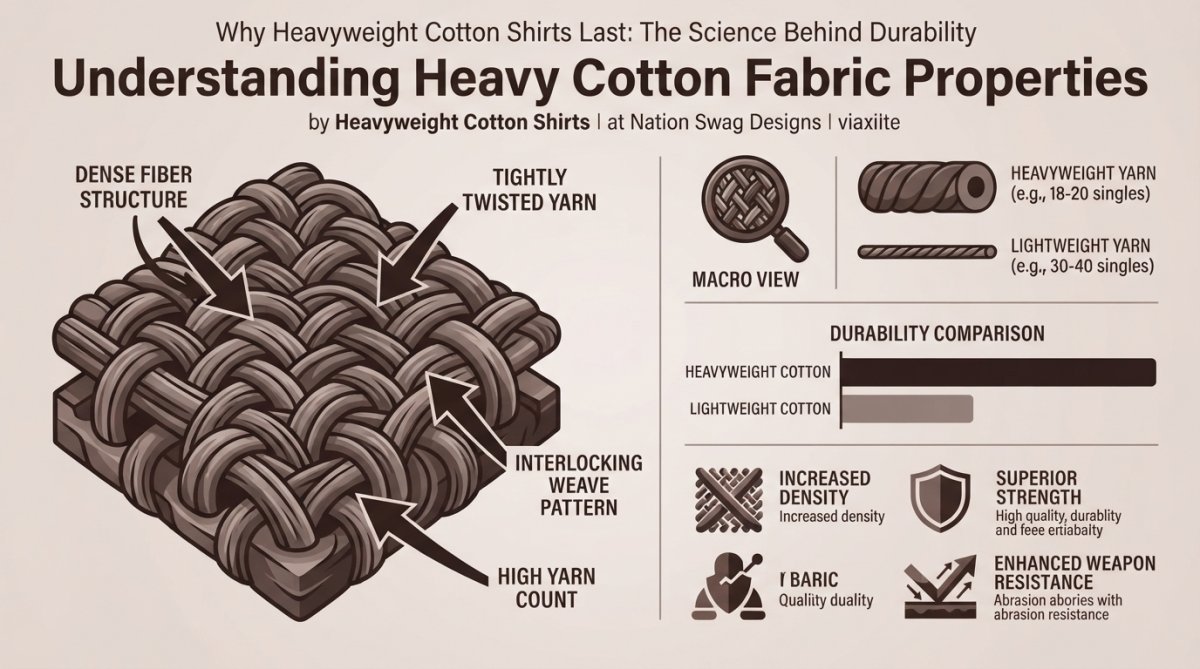
Heavy cotton fabric properties work together to create durability that's immediately noticeable when you put the shirt on. The weight, the way it drapes, and the resistance it offers to stretching are structural indicators of a well-built garment.
Weave Density and Construction Techniques
Weave density refers to how tightly the horizontal and vertical threads are packed together. A tight weave means more fibers per square inch, which creates a fabric that's harder to tear, more resistant to pilling, and less likely to snag.
The two most common weaves for t-shirts are jersey knit (for knitted fabric) and twill (for woven fabric). A densely knitted jersey with high thread count creates a fabric that resists pilling and maintains its shape far better than loosely knitted jersey. Garments cut and sewn carefully, with reinforced seams and properly finished stress points, last longer than those made with minimal seam allowance.
Ring-Spun vs. Open-End Yarn
Ring-spun yarn is the gold standard for durability. The ring-spinning process twists fibers in a continuous spiral, creating yarn that's tightly bound and inherently strong. Each fiber is wrapped around the yarn core multiple times, creating redundancy. If one fiber breaks, the surrounding fibers still hold the yarn together.
Open-end spinning is faster and cheaper but produces less tightly bound yarn. Open-end yarn pills more easily and deteriorates faster under stress.
How to Make Cotton Shirts Last Longer: Washing and Care
Even the best heavyweight cotton shirt will deteriorate quickly with poor care. Washing and drying methods directly impact how long the garment remains wearable.
Optimal Wash Cycles and Temperature
Cold water is non-negotiable for long-term durability. Hot water breaks down cotton fibers faster and causes more aggressive dye fading. Use a gentle or permanent-press cycle rather than heavy-duty. Wash frequency matters too, heavyweight cotton shirts can be worn multiple times before washing if they're not visibly soiled. This simple practice can extend garment life by 20-30% over several years.
Use a mild, plant-based detergent rather than harsh chemical cleaners. Avoid fabric softeners, which coat fibers and interfere with water absorption.
Drying Methods That Preserve Textile Integrity
Air drying is always superior to machine drying for cotton longevity. The heat and tumbling action in a dryer accelerates fiber breakdown and causes shrinkage. Hang-drying allows the garment to dry naturally while maintaining its shape.
If you must use a dryer, use the lowest heat setting and remove the shirt while still slightly damp. For storage, fold rather than hang to maintain the garment's shape. Store in a cool, dry place away from direct sunlight, which fades colors and degrades fibers.
Heavy Cotton Shirt Shrinkage: What to Expect and How to Prevent It
Shrinkage is inevitable with cotton, but understanding it prevents disappointment and poor fit.
Pre-Shrinkage and Sanforization Standards
Quality manufacturers pre-shrink cotton fabric before cutting and sewing. This process, called sanforization, subjects the fabric to heat and moisture similar to what it will experience during home washing. Pre-shrunk fabric shrinks minimally after purchase, typically 2-3% in length and width.
Unsanforized cotton can shrink 5-10% or more, which dramatically changes fit. Always check whether a shirt is sanforized before purchasing. Reputable brands like those stocked at Nation Swag Designs use sanforized fabric to ensure consistent sizing. Even pre-shrunk fabric shrinks slightly with repeated washing. To minimize additional shrinkage, follow the washing guidelines above: cold water, gentle cycle, and air drying.
Heavy Cotton Shirt Pilling: Prevention and Long-Term Appearance
Pilling, those small balls of fiber that form on the surface, is one of the most visible signs of fabric degradation. High-quality, long-staple cotton resists pilling because the fibers are stronger and bond more securely.
Prevention starts with fabric quality: ring-spun yarn made from long-staple cotton pills significantly less than open-end yarn. Wash inside-out to reduce surface abrasion and avoid washing with rough fabrics like denim or towels. If pilling does occur, use a fabric shaver or lint roller to remove the pills.
The visual aging process of quality heavyweight cotton is actually appealing. Rather than pilling and thinning, premium cotton develops a soft patina over time. The fibers relax slightly, creating a garment that becomes more comfortable with age while maintaining structural integrity.
Durability Comparison: Heavyweight vs. Lightweight Cotton
The practical differences between heavyweight and lightweight cotton become obvious when you compare them side by side.
Wear and Tear Resistance Across Different Weights
A lightweight shirt (150-180 GSM) shows visible wear within 20-30 wash cycles. After 50-75 washes, the shirt is typically unwearable. A standard-weight shirt (180-220 GSM) lasts 75-150 wash cycles before showing significant degradation. A true heavyweight shirt (220+ GSM) made from quality materials remains wearable for 200+ wash cycles.
| Weight Category | GSM Range | Expected Lifespan | Best For |
|---|---|---|---|
| Lightweight | 150-180 | 1-2 years | Casual summer wear, disposable fashion |
| Standard | 180-220 | 2-4 years | Everyday wear, moderate durability needs |
| Heavyweight | 220-280 | 4-7+ years | Work wear, patriotic apparel, long-term investment |
| Premium Heavyweight | 280+ | 7+ years | Professional use, collectible pieces |
Shape Retention and Garment Longevity
Lightweight fabrics lose their shape quickly. The collar stretches, the shoulders sag, and the overall silhouette becomes distorted within months. Heavyweight fabric maintains its shape indefinitely because there's sufficient fabric weight to resist the forces of wearing and washing. A heavyweight shirt worn 100 times looks nearly identical to one worn 10 times.
Environmental Impact and Sustainable Heavy Cotton Choices
The durability of heavyweight cotton carries environmental implications that often get overlooked. A shirt worn 500 times over five years has a dramatically lower environmental impact per wear than a shirt worn 100 times over one year.
Quality heavyweight cotton, especially when grown using sustainable practices, represents a genuine environmental choice. When shopping for sustainable apparel, prioritize durability over other factors. Manufacturers like Gildan and Bella + Canvas, which Nation Swag Designs partners with, have made significant strides in sustainable cotton sourcing by prioritizing long-staple varieties that produce more durable fabric.
The Visual Aging Process: How Quality Cotton Develops Character
Premium heavyweight cotton doesn't just last, it ages beautifully in ways that cheap fabric cannot.
After 10-20 washes, the fabric develops a slight softness and patina. Colors become richer and more saturated as the fibers relax and light reflects differently off the worn surface. After 50+ washes, quality heavyweight cotton develops visible character while maintaining structural integrity.
Graphic prints on heavyweight cotton age differently than on lightweight fabric. Because the base fabric is strong and stable, graphics remain crisp and vibrant far longer. The design doesn't crack and fade as quickly because it's applied to stable, non-stretching fabric. For those who wear their apparel as a statement, whether patriotic, faith-based, or tactical, this aging process matters because the graphic and message remain visible and impactful for years.
Understanding why heavyweight cotton shirts last comes down to respecting the material and the construction. Quality matters at every level: fiber length, yarn spinning method, weave density, and manufacturing precision all contribute to garments that function as genuine wardrobe staples. When you invest in heavyweight cotton apparel from Nation Swag Designs, you're choosing pieces designed to carry your message for years of meaningful wear.
Frequently Asked Questions
What makes heavyweight cotton more durable than regular cotton?
Heavyweight cotton shirts last longer due to higher GSM (grams per square meter), typically 200+ GSM compared to 150-170 GSM in lightweight fabrics. This increased density means more fiber per square inch, creating stronger yarn and tighter weave construction. Premium ring-spun cotton with longer staple fibers adds further strength, reducing wear and tear during everyday use and repeated wash cycles. The thicker weave also resists pilling and maintains shape retention better over time.
Does heavyweight cotton shrink more than regular cotton?
Heavyweight cotton can shrink more in total volume, but quality manufacturers use sanforization or pre-shrinkage treatments to control this. Most preshrunk heavyweight cotton shirts shrink only 2-3% after the first wash. To minimize shrinkage, wash in cold water, avoid high heat dryers, and follow care instructions. Proper pre-shrinkage treatment during manufacturing, a standard practice for premium brands, ensures your heavyweight shirt maintains its fit and shape retention through multiple wash cycles.
How do you prevent pilling on heavyweight cotton shirts?
Heavy cotton shirt pilling occurs when loose fibers ball up on the fabric surface. Prevent it by washing inside-out in cold water with gentle detergent, avoiding high-speed dryer cycles, and removing the garment promptly. Fabric density matters, higher GSM and tighter weave construction naturally resist pilling better. Avoid washing with rough fabrics or velcro. Quality ring-spun yarn with longer staple fibers pills less than open-end yarn. Most premium heavyweight cotton develops minimal pilling with proper care and maintains textile integrity through extended wear.
Are heavyweight cotton shirts worth the investment for long-term wear?
Yes, heavyweight cotton shirts offer superior garment longevity compared to lightweight alternatives. The combination of higher GSM, better fiber quality, and denser weave construction means they withstand more wash cycles and daily wear and tear. While initial pricing may be higher, the extended lifespan, often 2-3 times longer than standard cotton, makes them cost-effective wardrobe staples. For those seeking lasting comfort and durability in everyday use, heavyweight cotton represents genuine value through reduced replacement frequency and consistent performance.
This article was written using GrandRanker