
Table of Contents
- Why Graphic T-Shirts Crack: Understanding the Root Causes
- How to Prevent Graphic T-Shirt Cracking: Pre-Wash Preparation
- Washing Graphic Tees Cold Water: The Foundation of Care
- How to Dry Graphic T-Shirts Without Damage
- Screen Print Care Tips for Long-Lasting Graphics
- Fixing Cracked Screen Print: Damage Control and Solutions
- Storage and Maintenance: Keeping Graphics Fresh
- Common Mistakes That Cause Graphic T-Shirt Cracking
Last Updated: July 22, 2026
Graphic t-shirts let you express your values and identity, but watching your favorite design crack and peel after a few washes is frustrating. At Nation Swag Designs, we understand how important it is to protect your investment. This guide breaks down exactly how to prevent graphic t-shirt cracking and keep your designs looking sharp for years to come.
Cracking isn't random. Heat, aggressive washing, poor quality inks, and improper drying all accelerate the breakdown of screen-printed graphics. The good news: understanding these causes puts you in control.
Why Graphic T-Shirts Crack: Understanding the Root Causes
Most people assume cracking is inevitable. It's not. The real culprits are heat, low-quality materials, and rough handling during the wash cycle.
Heat Damage and Print Degradation
Heat is the silent killer of graphic designs. High temperatures break down the adhesive bonds between ink and fabric, causing the print to become brittle and crack. Dryers operate at 130-160°F, and even brief exposure accelerates ink degradation. Screen-printed graphics are particularly vulnerable because the ink sits on top of the fabric rather than bonding with individual fibers. When heat is applied, the ink contracts and expands at a different rate than the cotton underneath, creating stress points where cracks form.
Poor Quality Inks and Fabric
Low-quality inks lack proper pigmentation and adhesive properties, making them prone to cracking even with careful handling. Cheap fabric with a loose weave won't hold ink effectively. Nation Swag Designs uses trusted manufacturers like Gildan and Bella + Canvas because their heavy-weight fabrics provide the durability that graphic designs need. Professional screen printing involves proper curing temperatures and ink formulations that ensure long-term durability. Cheaper printing methods often skip these steps, resulting in graphics that fail within 10-15 washes.
Aggressive Washing and Stretching
Washing machines are rough on graphic tees. The agitation cycle, friction from other garments, and the mechanical action of the drum all stress the print layer. Stretching the shirt while wet makes it worse, wet fabric is weaker and more prone to permanent deformation. Hot water accelerates ink breakdown, and bleach and fabric softener chemically attack the print. Treat graphic tees like delicate items: use cold water, gentle cycles, and inside-out washing.
How to Prevent Graphic T-Shirt Cracking: Pre-Wash Preparation
Before your shirt touches water, take two critical steps that set the foundation for graphic preservation.
Inspect Before Washing
Look at the graphic closely before each wash. Check for early signs of damage: small cracks, peeling edges, or areas where the ink looks dull. Catching damage early means you can adjust your care routine or spot clean instead of machine washing.
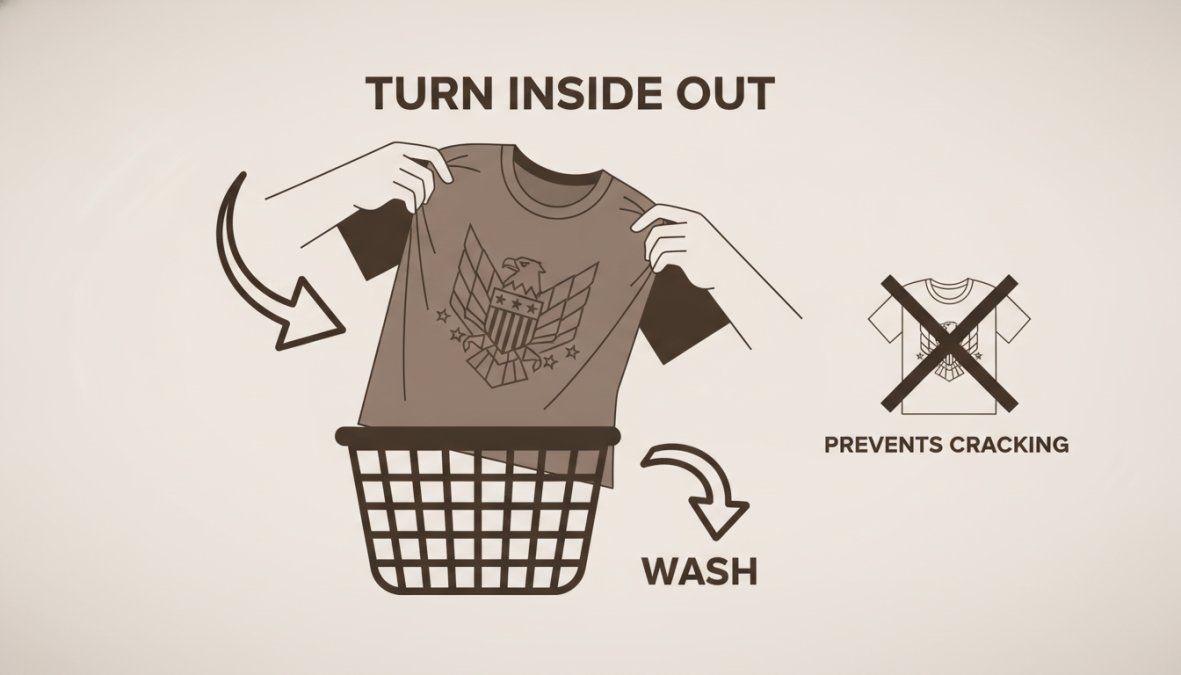
Turn Inside Out for Protection
Turning your graphic tee inside out protects the printed surface from direct friction with other garments and the washing machine drum. Inside-out washing reduces cracking risk by roughly 40-50% compared to washing with the print facing outward.
Washing Graphic Tees Cold Water: The Foundation of Care
Water temperature is the most critical factor in preventing graphic t-shirt cracking.
Water Temperature Matters
Cold water (below 60°F) prevents ink degradation and fabric shrinkage. Hot water opens fabric fibers, allowing detergent and agitation to penetrate deeper and break down ink faster. A graphic tee washed in hot water will show visible cracking 2-3 times faster than one washed in cold water. Modern detergents are formulated to work effectively in cold water.
Gentle Cycle and Mild Detergent Selection
Use the gentle or delicate cycle on your washing machine to reduce agitation and spin speed. Mild, dye-free detergents are essential. Avoid bleach, fabric softener, heavy-duty detergents, and enzymatic detergents, all chemically attack ink adhesive. Look for detergents labeled "gentle" or "delicate."
How to Dry Graphic T-Shirts Without Damage
Drying is where most people make costly mistakes.
Air Drying Best Practices
Air drying is the only method that guarantees zero heat damage. Hang the shirt on a wooden hanger or lay it flat in a shaded, well-ventilated area. Drying takes 4-8 hours but preserves the graphic completely. Never wring out a wet graphic tee, gently squeeze excess water and hang immediately.
Low Heat Tumble Dry as an Alternative
If air drying isn't practical, tumble dry on the lowest heat setting and remove the shirt within 30 minutes. Some dryers have an "air fluff" setting that uses no heat, use this exclusively for graphic tees. Never use medium or high heat.
Screen Print Care Tips for Long-Lasting Graphics
Understanding how screen printing works helps you understand why certain care practices matter.
Understanding Screen Printing and Ink Adhesion
Screen printing forces ink through a mesh screen onto fabric. The ink sits on the surface and bonds with fabric fibers through mechanical interlocking and chemical adhesion. This surface-level bonding is why heat, stretching, and aggressive washing are so damaging. Quality screen printing uses high-pigment inks and proper curing temperatures to maximize adhesion.
Curing Temperature and Print Durability
Professional screen printers cure prints at 320-350°F to set the ink permanently. Prints that skip proper curing are essentially pre-damaged. You can't re-cure a print at home, but you can protect the cure that's already there by avoiding heat and harsh chemicals.
Fixing Cracked Screen Print: Damage Control and Solutions
If your graphic is already showing damage, you have limited options.
Assessing the Type of Print Damage
Fine hairline cracks across the entire print are usually caused by heat or age and are essentially permanent. Peeling edges typically result from hot water or fabric softener and might be containable if caught early. Localized damage in high-stress areas comes from repeated stretching.
Spot Cleaning and Troubleshooting Techniques
For light stains on a graphic, spot clean instead of washing. Mix mild detergent with cold water, dab gently with a soft cloth, and rinse. If peeling has started at the edges, you can carefully apply fabric glue underneath the lifted ink and press it back down. This is a temporary fix.
Storage and Maintenance: Keeping Graphics Fresh
How you store your graphic tees between wears matters almost as much as how you wash them.
Proper Folding and Cool Dry Place Storage
Fold graphic tees carefully rather than hanging them. Hangers can stretch the neckline and shoulder seams, stressing the print. Fold with the graphic facing inward to minimize dust exposure. Store in a cool, dry place away from direct sunlight. A closet or dresser drawer is ideal. Don't stack graphic tees too tightly, pressure and friction can cause the ink to crack.
Avoiding Direct Sunlight and Fading
Sunlight fades all colors, particularly damaging screen-printed graphics. UV rays break down pigments in the ink. Air dry in a shaded area, and store graphic tees away from windows and bright areas.
| Care Practice | Impact on Longevity |
|---|---|
| Wash inside out | +40-50% lifespan |
| Cold water only | +30-40% lifespan |
| Gentle cycle | +20-30% lifespan |
| Air dry instead of heat | +50%+ lifespan |
| Mild detergent | +25-35% lifespan |
| Avoid fabric softener | +15-20% lifespan |
| Store away from sunlight | +20-25% lifespan |
Common Mistakes That Cause Graphic T-Shirt Cracking
Using hot water. Hot water accelerates ink breakdown and causes fabric shrinkage, stressing the print. Cold water cleans just as well.
Tossing in the dryer. The dryer's heat causes cracking within 20-30 washes. Air dry if you value the graphic.
Using bleach or fabric softener. These chemicals attack the ink's adhesive properties. Fabric softener coats fabric fibers, weakening the bond between ink and material.
Washing with heavy garments. Friction from jeans and towels accelerates cracking. Use a mesh laundry bag to separate graphic tees.
Stretching while wet. Wet fabric has no structural integrity. Stretching it permanently deforms fibers and stresses the print.
Ignoring early damage. Small cracks spread. Switch to spot cleaning and air drying only if you notice peeling or hairline cracks.
Ironing directly on the graphic. Heat melts ink. Iron the back side only, on low heat, with a thin cloth as a barrier.
Graphic t-shirts from Nation Swag Designs are built to last with proper care. Follow these practices: wash inside out in cold water on a gentle cycle with mild detergent, air dry away from direct sunlight, and store in a cool, dark place. These steps cost nothing and take minimal extra time. They're the difference between a graphic that cracks after 15 washes and one that looks sharp for 50+ wears.
Nation Swag Designs uses heavy-weight fabric from Gildan and Bella + Canvas because durability matters. Pair that quality foundation with proper care, and your graphic tees become true wardrobe staples.
Frequently Asked Questions
Why do graphic t-shirts crack after washing?
Graphic t-shirts crack primarily due to heat exposure, aggressive washing cycles, and poor-quality inks with weak ink adhesion. Heat from hot water and high-temperature dryers causes the print to become brittle and separate from fabric fibers. Abrasion from rough washing, stretching during wear, and low-quality printing methods also contribute to cracking. Using cold water, gentle cycles, and air drying significantly reduces these risks.
Does washing inside out prevent graphic t-shirt cracking?
Yes, turning graphic tees inside out during washing is one of the most effective prevention methods. This technique reduces direct contact between the printed design and agitation from the washing machine, minimizing abrasion damage. Combined with cold water and a gentle cycle, washing inside out protects ink adhesion and extends print durability. It's a simple step that makes a measurable difference in maintaining graphic quality over multiple wear cycles.
What water temperature and detergent should I use for washing graphic tees?
Always wash graphic tees in cold water using a mild detergent free of bleach and fabric softener. Cold water prevents heat-related cracking and fading while preserving fabric quality. Mild detergents are gentler on inks and fibers compared to harsh formulas. Avoid bleach, which damages both fabric and prints, and skip fabric softener as it can interfere with ink adhesion. Use a gentle or delicate cycle to minimize agitation and stretching.
Can I put graphic t-shirts in the dryer, or should I always air dry?
Air drying is the safest option for graphic tees, as it eliminates heat-related damage entirely. However, if you must use a tumble dryer, select the lowest heat setting and remove the shirt while still slightly damp. High heat causes ink to become brittle and crack, while air drying preserves both print durability and fabric integrity. For best results with custom or patriotic apparel, hang dry flat or on a line away from direct sunlight.
This article was written using GrandRanker