
Table of Contents
- Do Graphic Tees Shrink in Wash? The Short Answer
- Why Graphic Tees Shrink: Natural Fibers and Heat Exposure
- Graphic Tee Fabric Types and Their Shrinkage Patterns
- How to Wash Graphic Tees Without Causing Shrinkage
- Best Way to Dry Graphic Tees and Prevent Shrinkage
- How to Unshrink a Graphic Tee: Restoration Techniques
- Common Mistakes That Make Graphic Tees Shrink Faster
- Protecting Graphic Print Quality While Preventing Shrinkage
Last Updated: July 27, 2026
Do Graphic Tees Shrink in Wash? The Short Answer
Yes, graphic tees shrink in wash due to how natural fibers like cotton respond to heat and moisture. Most shrinkage is preventable. Cotton-based graphic tees will shrink if exposed to hot water and high-heat drying, but pre-shrunk fabrics from quality manufacturers like Gildan and Bella + Canvas, used in Nation Swag Designs apparel, minimize this risk significantly.
Shrinkage typically ranges from 2-3% on pre-shrunk garments to 5-10% or more on non-pre-shrunk tees. Temperature is the primary culprit. Cold water and air drying eliminate most shrinkage risk, while hot water and tumble drying create the conditions for fabric distortion.
Why Graphic Tees Shrink: Natural Fibers and Heat Exposure
When you wash a graphic tee, cotton fibers naturally swell when wet and contract when dried. Heat accelerates this contraction dramatically. Cold wash followed by air drying produces minimal shrinkage, while hot water and tumble drying can reduce a shirt by a full size.
Cotton is a natural cellulose fiber with inherent elasticity. When manufactured into fabric, fibers are held under tension. Water relaxes that tension, and heat locks in the new, smaller dimensions.
Cotton and Cotton Blends: The Primary Culprit
Pure cotton shrinks more aggressively than cotton blends. A 100% cotton graphic tee can shrink 5-10% if subjected to hot water and high-heat drying. Cotton blends, typically cotton mixed with polyester, shrink less because polyester fibers don't absorb water the way cotton does. A 50/50 cotton-polyester blend might shrink only 2-3% under the same conditions.
Blended fabrics also hold graphics better during washing. The polyester component resists moisture absorption, meaning less fiber movement and less stress on the print itself.
Pre-Shrunk vs. Non-Pre-Shrunk Fabrics
Pre-shrunk fabrics have been treated during manufacturing to remove most shrinkage potential. A pre-shrunk tee might shrink only 2-3% even if washed in hot water and dried hot. Non-pre-shrunk fabrics can shrink 8-10% or more, especially if exposed to heat.
A non-pre-shrunk large that shrinks 8% becomes closer to a medium. A pre-shrunk large that shrinks 2% barely changes. Check the care label to determine if a garment is pre-shrunk. If it doesn't mention pre-shrinking, assume it's not.
Graphic Tee Fabric Types and Their Shrinkage Patterns
Different fabric weights and weaves respond differently to washing. Heavy-weight fabrics like those used in Nation Swag Designs crewneck tees typically shrink less than lightweight options. The denser weave means fibers are more tightly packed, with less room for significant fiber movement. A heavy-weight pre-shrunk tee might shrink only 1-2%, while a lightweight jersey might shrink 3-4% under identical conditions.
Screen Print vs. DTG: Durability and Shrinkage Differences
Screen-printed graphics are applied using ink forced through a mesh screen directly onto the fabric surface. When fabric shrinks, the underlying shirt gets smaller, but the ink layer doesn't shrink at the same rate. This mismatch can cause the graphic to crack, peel, or wrinkle if shrinkage is significant.
DTG (direct-to-garment) printing injects ink directly into the fabric fibers, creating a design that moves with the garment. DTG graphics are less prone to cracking during shrinkage because the ink is embedded rather than sitting on the surface. However, DTG prints can fade faster if exposed to excessive heat.
For screen-printed graphic tees, minimizing shrinkage is critical for graphic longevity. A 5% shrinkage might cause visible cracking in a screen-printed design, while the same shrinkage barely affects a DTG print. DTG prints tolerate shrinkage better but suffer from heat exposure, so DTG tees need cold water and gentle drying for different reasons than screen-printed ones.
Vintage and Graphic Tees: Special Considerations
Vintage graphic tees often use non-pre-shrunk or lightly pre-shrunk cotton and are more fragile. Washing a vintage graphic tee requires extra caution: cold water, gentle cycle, inside-out placement, and air drying are essential to preserve both fit and graphic.
Newer graphic tees from quality brands like those Nation Swag Designs partners with are more resilient due to modern pre-shrinking, improved ink formulations, and better fabric quality. However, treat graphic tees more gently than plain tees because the print adds complexity to fabric care.
How to Wash Graphic Tees Without Causing Shrinkage
Step 1: Choose Cold Wash and Lower Spin Speed
Cold water is your first line of defense against shrinkage. Set your washing machine to cold (65°F or below) and use a delicate or gentle cycle. The delicate cycle uses slower agitation and shorter spin times, reducing stress on both fabric and graphic.
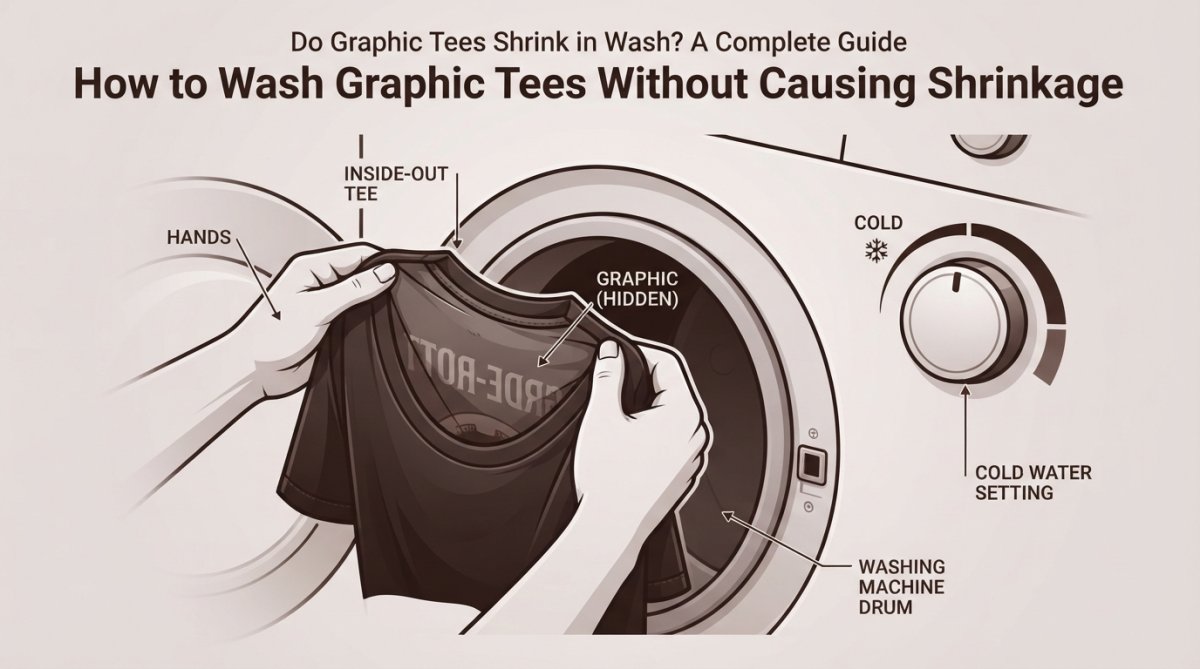
Spin speed matters more than people realize. A high-speed spin creates mechanical stress on wet fibers that are at their most vulnerable. Slower spin speeds, typically 600-800 RPM instead of 1200+ RPM, are gentler on the garment.
Load your washer with a moderate amount of clothing. Overloading reduces water circulation and forces the machine to work harder, increasing agitation.
(/products/classic-kids-crewneck-t-shirt-gildan%C2%AE-5000b) Without Causing Shrinkage]Step 2: Use Gentle Detergent and Avoid Bleach
Use a mild, fragrance-free detergent designed for delicate fabrics. Avoid detergents with enzymes or bleach, which break down fibers and can fade or damage printed graphics. Use half the recommended amount for a normal load, your graphic tees will be just as clean with less detergent.
Avoid fabric softener entirely. It coats fibers with a waxy substance that can damage graphics and is unnecessary for graphic tees.
Step 3: Turn Shirts Inside Out to Protect Graphics
Turning your graphic tee inside out before washing is one of the simplest and most effective protective measures. The graphic faces inward, away from the agitation of the wash cycle and friction of other garments. This reduces direct contact between the print and the mechanical action of the washer, minimizing the risk of cracking, peeling, or fading.
This step takes five seconds and costs nothing. Make it a habit.
Best Way to Dry Graphic Tees and Prevent Shrinkage
Air Dry vs. Tumble Dryer: Which Preserves Your Shirt
Air drying is the gold standard for graphic tees. Hang the shirt on a hanger or lay it flat on a clean surface away from direct sunlight. Air drying eliminates heat-related shrinkage entirely. A graphic tee dried on a hanger or laid flat will maintain its dimensions almost perfectly, especially if pre-shrunk.
The downside is time, air drying takes 24-48 hours. If speed is essential, use the lowest heat setting on your dryer and remove the shirt while still slightly damp. Finish drying it flat or on a hanger. Never use high or medium heat for graphic tees.
Proper Storage to Maintain Fit and Graphic Integrity
Fold graphic tees rather than hanging them, unless you use padded hangers. Regular hangers can create creases and stretch the shoulder seams over time. Store graphic tees in a cool, dry place away from direct sunlight. Sunlight fades both the fabric and the graphic, especially DTG prints.
Don't store graphic tees with heavy items stacked on top. The weight can create permanent creases and compress the fabric.
How to Unshrink a Graphic Tee: Restoration Techniques
If your graphic tee has already shrunk, restoration is possible in some cases. The earlier you attempt restoration after shrinkage occurs, the better your chances of success.
The Gentle Stretch Method Using Conditioner
Hair conditioner can help relax cotton fibers and make them more pliable for stretching. Fill a sink with lukewarm water and add a generous amount of conditioner. Submerge the shrunken graphic tee and let it soak for 20-30 minutes.
After soaking, gently remove the shirt and squeeze out excess water without wringing. Lay the shirt flat on a clean towel and carefully stretch it back toward its original dimensions. Work slowly and gently. Once you've stretched it to approximately the right size, pin the edges to the towel to hold the shape while it dries. This process typically takes 24-48 hours. The shirt may not return to its exact original size, but this method often recovers 50-75% of lost dimensions.
This technique works better on plain cotton tees than on graphic tees. The graphic adds resistance to stretching and can crack if you pull too hard.
Blocking and Pinning for Permanent Shape Recovery
Blocking is a textile preservation technique where you stretch a garment to its intended dimensions and hold it in place while it dries. After soaking your shrunken tee in conditioner water, lay it flat on a clean, dry towel. Using a measuring tape or comparing it to an unshrunk garment of the same size, carefully stretch the shirt to match the original dimensions. Pin the edges to the towel using T-pins or sewing pins placed every 2-3 inches around the perimeter.
Allow the shirt to dry completely, this can take 48-72 hours. The fibers will set into their new shape as they dry. Once dry, carefully remove the pins.
For graphic tees, blocking is less ideal than for plain shirts because the print can crack if you pull too hard. However, if you're gentle and patient, you can often recover most of the lost fit without damaging the graphic.
Common Mistakes That Make Graphic Tees Shrink Faster
The biggest mistake is using hot water. Hot water is the single most common cause of shrinkage in graphic tees. Cold water cleans just as effectively and eliminates the primary driver of shrinkage.
High-heat drying is the second major mistake. Throwing a graphic tee in the dryer on high heat is almost guaranteed to cause shrinkage, especially if the shirt isn't pre-shrunk.
Overloading the washing machine forces the machine to work harder and agitate more vigorously, increasing mechanical stress on the fibers and graphic. Using bleach or harsh detergents damages both the fabric and the graphic. Washing graphic tees with heavy items like jeans or towels stresses the delicate graphic and fibers. Drying graphic tees in direct sunlight fades both the fabric and the graphic. Dry your graphic tees in shade or indoors, away from direct sunlight.
Protecting Graphic Print Quality While Preventing Shrinkage
Shrinkage and graphic degradation are interconnected. Shrinkage causes the underlying fabric to shift, which stresses the ink layer and can cause cracking or peeling.
Why High Temperature Damages Both Fabric and Graphics
High heat causes cotton fibers to contract and relax, leading to shrinkage. The same heat can cause ink to set too quickly or unevenly, leading to fading or color shifting. For screen-printed graphics, high heat can cause the ink to become brittle and prone to cracking.
DTG prints are particularly vulnerable to heat fading. The ink is embedded in the fibers, and heat accelerates the breakdown of the dye molecules. A DTG graphic dried on high heat will fade noticeably faster than one that's air-dried.
As the fabric shrinks, the graphic, which doesn't shrink at the same rate, gets pulled and stressed. This mechanical stress causes cracking in screen prints and can cause DTG prints to blur or fade. Preventing shrinkage directly protects the graphic from this stress.
Wash Labels: Reading and Following Care Instructions
Every graphic tee comes with a care label that specifies the manufacturer's recommended washing and drying method. These labels are based on testing of that specific fabric and graphic combination. Following the care label instructions is your best guarantee of maintaining both fit and graphic quality.
Don't ignore care labels because you think they're overly cautious. If the label says cold water, hot water will accelerate shrinkage and graphic degradation. If it says lay flat to dry, machine drying will cause problems.
For Nation Swag Designs apparel, the care instructions reflect the specific fabric weight and printing method used. Following those instructions means your graphic tee will look sharp for years.
Graphic tees are an investment in self-expression and identity. Whether you're wearing patriotic designs or faith-based graphics, protecting your shirt's fit and print quality matters. Cold water, gentle cycle, inside-out placement, and air drying are simple steps that preserve both the fabric and the graphic for years of wear.
Nation Swag Designs uses heavy-weight, pre-shrunk fabrics from trusted manufacturers like Gildan and Bella + Canvas because durability and shrinkage resistance matter. When you combine quality fabric with proper care, your graphic tee becomes a reliable piece of your wardrobe that looks as sharp on your 50th wear as it did on your first.
Frequently Asked Questions
What causes graphic tees to shrink in the wash?
Graphic tees shrink primarily because of heat exposure and the natural properties of cotton and cotton blends. When natural fibers are exposed to hot water and high temperatures in the tumble dryer, the fiber tension relaxes and the fabric shrinks. Pre-shrunk fabrics undergo this process at the mill, so they shrink less after purchase. Non-pre-shrunk tees can shrink 3-5% or more depending on fabric composition and washing temperature.
How do you prevent graphic tees from shrinking in the wash?
Prevent shrinkage by washing graphic tees in cold water, using a gentle laundry cycle, and turning the shirt inside out to protect the print. Avoid high temperatures and tumble dryers, air dry instead whenever possible. Use mild detergent, reduce spin speed, and always check the wash label for care instructions. These preventative maintenance steps protect both the fabric elasticity and graphic durability, extending garment longevity.
Can you unshrink a graphic tee after it has already shrunk?
Yes, you can attempt to unshrink a graphic tee using gentle restoration techniques. Soak the shirt in lukewarm water mixed with hair conditioner or glycerin for 30 minutes to relax the fibers. Gently stretch the garment back to its original shape while wet, then lay it flat or pin it to a towel to dry. Blocking and pinning helps set the new shape. Success depends on the severity of shrinkage and fabric type, but this method works best on cotton and cotton-blend tees.
Do screen print and DTG graphic tees shrink differently?
Screen print and DTG (direct-to-garment) prints respond differently to washing and heat. Screen print inks sit on the fabric surface and are more durable under heat, but the underlying garment still shrinks with high temperatures. DTG prints penetrate the fibers and can crack if the fabric shrinks excessively or if high heat is used. Both print types benefit from cold water washing and air drying to preserve graphic integrity while minimizing size reduction of the garment itself.
This article was written using GrandRanker