
Table of Contents
- Start With a Heavyweight Graphic Tee Base Layer
- Add a Mid-Layer: Hoodies, Flannels, and Chunky Knits
- Choose Outerwear That Shows Off Your Graphic
- Play With Proportions: Hemlines, Tuck-Ins, and Silhouette
- Winter Streetwear Outfit Ideas That Work in Real Cold
- How to Wash Graphic Tees Correctly After Layering Season
- Build a Capsule Wardrobe Around Your Graphic Tees
- Conclusion
- Frequently Asked Questions
Last Updated: September 15, 2026
Start With a Heavyweight Graphic Tee Base Layer
The foundation of any winter outfit is the base layer, and for graphic tees that means understanding what the fabric actually does against your skin. Most layering guides stop at "wear a tee under a hoodie." The functional reality is that your base layer's job is moisture management first and insulation second. Cotton holds moisture against your skin, and wet fabric conducts heat away from your body roughly 25 times faster than dry fabric, which is why a sweaty cotton tee under a heavy coat can leave you colder than wearing nothing at all once you stop moving. Learning how to layer graphic tees for winter starts with picking a tee whose fabric weight and fiber content work with that mechanism instead of against it.
Fabric Weight and Fiber: What Actually Traps Heat
Fabric weight is measured in ounces per square yard, and it determines how much still air the fabric can trap. Still air is the actual insulator, the fabric is just the structure that holds it. A standard 4.5-ounce tee is too thin to trap meaningful air and collapses under mid-layers. A 5.5-ounce or heavier cotton or cotton-blend tee holds its structure and creates a thin insulating pocket against your torso. Ring-spun cotton and cotton-polyester blends (common in 50/50 hoodie and tee construction) maintain that structure after repeated washing, while cheap open-end cotton tends to thin and pill.
The trade-off most guides ignore: cotton is comfortable and holds its shape, but it is hydrophilic, it absorbs and retains moisture. Merino wool and synthetic wicking fabrics move moisture away from your skin, which matters if you run hot, walk long distances, or go in and out of heated buildings all day. A practical compromise many people land on is a lightweight merino or synthetic base layer under the graphic tee on the coldest or most active days, with the graphic tee worn as the visible middle layer instead of the true base. That keeps the print on display while a functional layer does the moisture work.
Fit Check: Not Too Tight, Not Too Baggy
The ideal base layer fits close to the body without restricting movement. Too tight and the fabric compresses, eliminating the air pockets that insulate. Too loose and it bunches under mid-layers, creating lumps and cold gaps at the waist. Aim for a fit that skims your torso with roughly an inch of extra room at the chest and shoulders. Unisex cuts from brands like Gildan and Bella + Canvas accommodate a range of body types without looking sloppy. For a cleaner line, a french tuck keeps the hem controlled while preserving the graphic's visibility.
Body Type and Bulk Management
This is the part almost no layering guide addresses. The goal is warmth without adding a silhouette that reads as padded. Three patterns that work across body types:
- Broader shoulders or chest: Keep the base layer fitted and let the mid-layer carry the volume. A fitted graphic tee under an oversized hoodie balances the frame instead of squaring it off.
- Longer torso: A tee that hits at or just below the hip prevents the cold-gap that opens when a shorter tee rides up under a mid-layer. Look for a longer body length rather than sizing up, which widens the shoulders.
- Shorter torso or petite frame: A cropped or standard-length tee under a hip-length mid-layer avoids the "swallowed by fabric" effect. One oversized piece per outfit is the working rule.
A common pattern is to treat the base layer as the fitted anchor and let exactly one other layer be loose. That single constraint solves most bulk problems before you even think about color or print.
Add a Mid-Layer: Hoodies, Flannels, and Chunky Knits
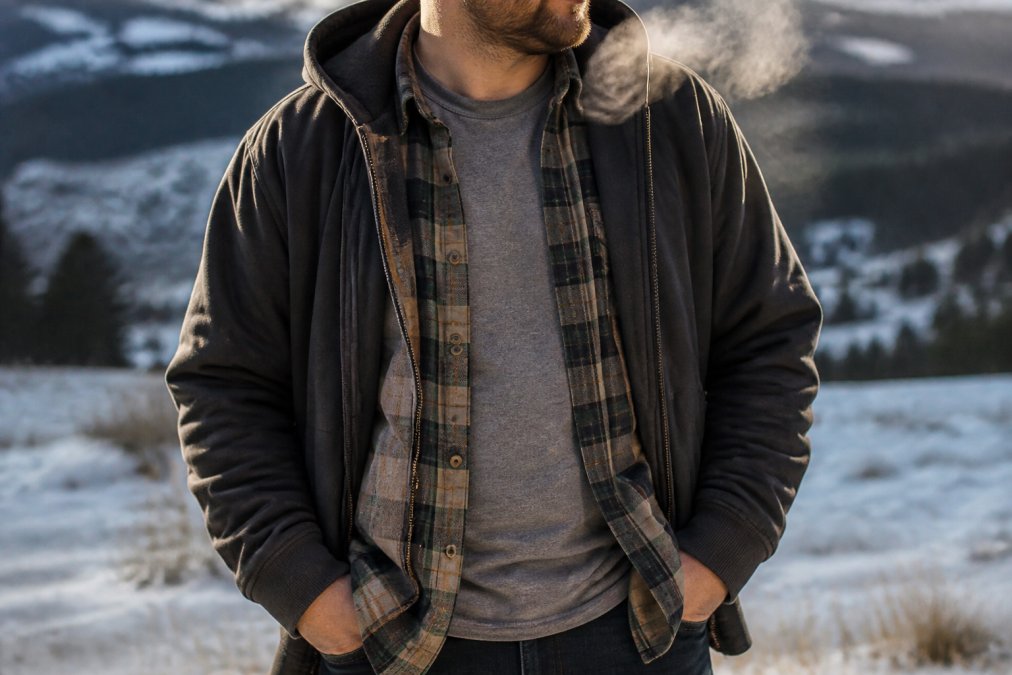
The mid-layer is where winter layering gets interesting. This is the piece that adds visible style while boosting warmth, and it's your best opportunity to create texture contrast and visual depth. A hoodie over a graphic tee is the simplest and most effective combination. The hoodie's weight traps heat, and when left unzipped or worn open, it frames your graphic design perfectly. Flannels and cardigans offer a different aesthetic, leaning more toward casual or vintage-inspired looks. The key is choosing a mid-layer that complements rather than competes with your graphic.
Hoodie Over Graphic Tee: The Easiest Combo
Nothing beats a pullover hoodie for practical winter warmth. The Nation Swag Classic Unisex Pullover Hoodie (Gildan 18500) is built for this exact purpose. Its 50/50 cotton-polyester blend provides substantial insulation without excessive bulk, and the air jet yarn construction reduces pilling, so it stays smooth over your tee. When you layer graphic tees under a hoodie, leave the hoodie hem slightly shorter than your tee for a deliberate, styled look. This also prevents the tee from riding up when you move.
Flannel and Cardigan Options for Texture Contrast
An open flannel shirt adds visual interest through its pattern and weave. Choose a solid or subtly patterned flannel so your graphic remains the focal point. Chunky knit cardigans work similarly but lean more toward a cozy, minimalist aesthetic. The contrast between a smooth cotton tee and a textured knit creates depth that a single layer can't achieve. For a blazer approach, a structured wool blazer over a graphic tee delivers a smart-casual edge suitable for less rugged winter days.
Choose Outerwear That Shows Off Your Graphic
Your outer layer should protect you from the elements while still letting your graphic tee do its job. The trick is choosing outerwear that opens or unzips, so your mid-layer and graphic remain visible. A parka worn fully zipped hides everything underneath. An open puffer jacket or a wool overcoat worn unbuttoned frames your entire layered look. Thermal-lined jackets add warmth without the bulk of traditional winter coats. The goal is bulk-free insulation that lets you move naturally while keeping your silhouette intact.
Play With Proportions: Hemlines, Tuck-Ins, and Silhouette
Proportions decide whether a layered winter outfit looks intentional or accidental. The interplay between hemlines, tuck-ins, and overall silhouette is what separates a styled look from a pile of fabric. The core principle is simple: every layer you add increases visual mass, so each additional layer needs a deliberate job, either it shows the graphic, it insulates, or it frames the silhouette. A layer that does none of those three things is just bulk.
The Hemline Ladder
Think of your layers as rungs on a ladder, each ending at a different point so the graphic stays visible and the eye has a clear path down the body. A working pattern:
- Base graphic tee: hip or slightly below
- Mid-layer (hoodie, flannel, cardigan): waist to hip, worn open or unzipped
- Outerwear: knee or hip, worn open when conditions allow
When two adjacent layers end at nearly the same point, the outfit reads as a single thick block. Staggering the hems by two to four inches creates separation and lets each layer register.
Tuck Strategies and When to Use Them
Managing Bulk by Body Type
The One-Variable Rule
| Layer | Best Length | Tuck Style | Effect |
|---|---|---|---|
| Base graphic tee | Hip or slightly below | French tuck or full | Defines waist, shows graphic |
| Mid-layer hoodie | Waist or hip | Untucked | Casual, frames tee |
| Mid-layer flannel | Hip | Open, untucked | Texture contrast |
| Outerwear | Knee or hip | N/A (worn open) | Shows full layered look |
Winter Streetwear Outfit Ideas That Work in Real Cold
How to Wash Graphic Tees Correctly After Layering Season
Build a Capsule Wardrobe Around Your Graphic Tees
Conclusion
Gildan fabric weight and care guidelines
Cotton Incorporated fabric care resources
American Cleaning Institute laundry best practices
Frequently Asked Questions
What is the 3-layer rule for winter dressing?
The 3-layer rule means wearing a base layer, a mid-layer, and outerwear. For graphic tees, your tee is the base layer (pick heavyweight cotton so it holds shape). The mid-layer adds insulation, like a hoodie or flannel. Outerwear blocks wind and rain. This system traps warm air between layers while letting you remove pieces indoors without losing your look.
How do you layer a graphic tee under a hoodie without hiding the design?
Choose a hoodie with a wide neckline or wear it unzipped so the graphic stays visible. A V-neck or scoop-neck hoodie lets the print peek through at the collar. You can also pick a longer tee so the design shows below the hoodie hem. A French tuck, where you tuck just the front of the tee, keeps the graphic readable while defining your waist.
Can you wear graphic tees in winter without looking bulky?
Yes. Stick to thin, heavyweight cotton tees as your base instead of thick fleece. Choose mid-layers that fit close to the body, like a fitted flannel or a lightweight chunky knit. Avoid piling on multiple loose pieces. A single well-fitted mid-layer plus a structured jacket keeps your silhouette clean while still providing insulation.
How to keep graphic tees looking fresh after layering season?
Wash graphic tees inside out in cold water on a gentle cycle. Skip the dryer; hang them to dry instead. The heat from a dryer breaks down the print adhesive and causes cracking. Use a mild detergent and avoid fabric softener, which leaves residue that dulls the graphic. Following these steps keeps prints sharp and colors from fading through repeated winter wear.