
Table of Contents
- Heavyweight vs Lightweight Christian Hoodies: Quick Comparison
- What the Weight Numbers Actually Mean (GSM and Ounces)
- Heavyweight vs Midweight Hoodie: Where the Line Falls
- How Fabric Weight Affects Fit, Durability, and Print Quality
- Seasonal Versatility: Layering and Climate Suitability
- How to Wash Graphic Tees Correctly (and Hoodies Too)
- Heavyweight Christian Hoodies Worth Buying in 2026
- Frequently Asked Questions
Last Updated: September 12, 2026
Heavyweight vs Lightweight Christian Hoodies: Quick Comparison
Choosing between heavyweight vs lightweight christian hoodies comes down to one question: what are you wearing it for? A heavyweight hoodie delivers warmth, structure, and a premium hand-feel that holds its shape for years. A lightweight option (under 7 oz) moves with you, layers under a jacket, and works through three seasons. At Nation Swag Designs, we build our graphic hoodies on trusted heavy-blend blanks from Gildan and Bella + Canvas because fabric weight determines how a design looks on day one and year three.
Here is the short version before we get into the numbers:
| Factor | Heavyweight (8+ oz) | Lightweight (under 7 oz) |
|---|---|---|
| Warmth | High, stands alone in cold | Low, needs a base layer |
| Durability | Holds shape for years | Softens and thins faster |
| Print quality | Crisp detail, less bleed | Fine lines can distort |
| Best season | Fall and winter | Spring and summer |
| Layering | Wears over a tee | Wears under a jacket |
| Fit | Boxy, structured | Trim, closer to body |
The 7 to 8 oz band is where most buyers land, and where the most confusion lives. Below, we break down what the weight numbers mean, how they affect fit and print durability, and which heavyweight Christian hoodies are worth your money.
What the Weight Numbers Actually Mean (GSM and Ounces)
Fabric weight is the most useful specification on a hoodie tag, and most shoppers ignore it. It tells you how much material is packed into a given area, driving warmth, drape, and how long the garment survives repeated washing.
Understanding GSM (Grams per Square Meter)
GSM stands for grams per square meter, a metric measurement of fabric density. A higher GSM means more yarn packed into the same square meter, translating to more insulation and a denser printing surface. American brands often list ounces per square yard instead; the two scales measure the same quality.
As a rough guide:
- Under 250 GSM: light, breathable, summer-weight
- 250 to 300 GSM: midweight, the everyday workhorse
- 300 GSM and up: heavy, structured, cold-weather ready
The Textile Exchange materials glossary explains how fiber content and density interact, which matters because two hoodies at the same GSM can feel completely different depending on whether they are combed cotton, a cotton blend, or a fleece-back knit.
The 8 oz Question: Heavyweight or Lightweight?
An 8 oz hoodie sits right at the heavyweight threshold in most catalogs. Anything 8 oz or higher (roughly 270 to 300 GSM) qualifies as heavyweight. Below 7 oz is lightweight territory. Between 7 and 8 oz is midweight, where the honest answer gets more useful than the marketing label.
Heavyweight vs Midweight Hoodie: Where the Line Falls
The heavyweight vs midweight hoodie distinction trips up more buyers than any other comparison. Midweight sits between 7 and 8 oz (roughly 250 to 280 GSM): warm enough for a cool morning, light enough indoors, and it layers under a jacket without bulk.
Heavyweight starts at 8 oz and climbs. The difference shows up in how it drapes on your shoulders, how it feels in your hand, and how it behaves after twenty washes. A midweight softens over time; a heavyweight breaks in but keeps its structure.
For a graphic hoodie, that structure is the point. A denser fabric resists the puckering and distortion that ruins printed designs, which is why heavy-duty construction is worth the extra cost if you plan to wear the piece weekly.
How Fabric Weight Affects Fit, Durability, and Print Quality
Fabric weight changes how a hoodie fits, how long it lasts, and how well the graphic survives. Heavier fabric holds a boxy fit and drop shoulder line without collapsing, resists pilling and shrinkage better than thin knits, and gives screen print and embroidery a stable surface to bond to.
Boxy Fit, Drop Shoulder, and Oversized Silhouette
Heavyweight fabric enables the boxy fit and drop shoulder construction that define modern streetwear. The extra density holds a wide, squared silhouette instead of draping into a shapeless tube. An oversized lightweight knit tends to sag at the shoulders by mid-afternoon.
If you want that structured, relaxed look, you need the weight to support it. A lightweight hoodie can be cut oversized, but it will not stay that way.
Screen Print Durability and Embroidery Detail
Screen print durability depends on fabric stability: a dense, low-shrink surface keeps ink from cracking along fold lines. Embroidery behaves the same way, heavy fabric supports tight stitch counts without pulling or distorting. Air jet yarn, used in both our Gildan and Bella + Canvas blanks, reduces pilling and gives prints a smoother base.
Seasonal Versatility: Layering and Climate Suitability
Most hoodie guides stop at "lightweight for summer, heavyweight for winter." That advice is technically true and practically useless: the real decision happens in the shoulder seasons and depends on what you are doing, not just the thermometer.
The Seasonal Transition Guide: When to Switch Weights
Think in terms of a working range for each weight class, then adjust for activity level and wind.
- Lightweight (under 7 oz, roughly 200 to 250 GSM): Comfortable as a standalone piece from about 60 to 75 degrees Fahrenheit in still air. Below 60, it works as a mid-layer under a shell or jacket. Above 75, you will likely want a tee instead.
- Midweight (7 to 8 oz, roughly 250 to 280 GSM): The true three-season workhorse. Standalone from about 50 to 65 degrees. Layers cleanly under a denim jacket or light shell down to the low 40s.
- Heavyweight (8 oz and up, roughly 300 GSM and above): Standalone from about 35 to 55 degrees. With a thermal base layer underneath, it handles down to roughly 25 to 30 degrees before you need a real coat.
Those ranges shift with two variables. Activity level: walking generates little heat, so a heavyweight that feels perfect on a 45-degree walk feels stifling on a 45-degree hike. Wind: a heavyweight fleece-back knit blocks wind better than a lightweight flat knit, so the same 50-degree day can call for different weights depending on whether you are downtown or in an open field.
A common pattern among year-round hoodie wearers is a three-piece rotation: one lightweight for spring and early fall, one midweight as the everyday default, and one heavyweight for deep fall and winter.
Layering Compatibility: Heavyweight Under a Jacket vs. Lightweight as a Base
Layering is where fabric weight matters most, and it is the part most guides skip.
Heavyweight hoodies as an outer layer. Worn over a thermal base layer, a heavyweight hoodie handles genuine cold: the fleece-back interior traps warm air and the denser face fabric resists wind. The trade-off is bulk, under a fitted jacket it feels tight across the shoulders and restricts arm movement. If you plan to layer a jacket over a hoodie, size the jacket up or choose a midweight.
Lightweight hoodies as a base layer. Worn over a tee and under a shell, a lightweight hoodie handles a cool morning without bulk, adding thin insulation without changing the jacket's silhouette. The trade-off: it offers almost no wind resistance alone, so it only works as an outer layer in mild, still conditions.
The hood itself matters. A double-lined hood adds warmth and structure, but also bulk at the neckline. If you layer a heavyweight hoodie under a jacket with a tight collar, the hood will bunch. A lightweight hoodie with a single-layer hood sits flatter under a jacket collar.
Matching Weight to Activity, Not Just Temperature
The same 45-degree day calls for different hoodies depending on what you are doing. A heavyweight is right for standing on a sideline, walking the dog, or slow outdoor work. A lightweight or midweight is right for a brisk walk, a walking commute, or any activity where you generate heat within ten minutes. Rule of thumb: if you will be moving enough to warm up, start lighter than the thermometer suggests, you can always add a layer, but you cannot easily shed one.
How to Wash Graphic Tees Correctly (and Hoodies Too)
Learning how to wash graphic tees correctly protects the print, and the same rules apply to hoodies, with one difference. Heavyweight hoodies behave differently in the wash than lightweight knits, and a routine that keeps a thin hoodie fine can ruin a heavy one if you ignore how dense fabric holds water, heat, and detergent.
The Core Routine (Works for Both Weights)
- Turn the garment inside out before washing
- Wash cold, gentle cycle, with like colors
- Skip fabric softener, which coats the print and reduces absorbency
- Hang dry or tumble on low
- Iron inside out only, never directly on the design
That routine is the baseline. The rest of this section is about what changes when the fabric gets heavier.
Why Heavyweight Hoodies Need Different Care
They hold more water, so they take longer to dry. A heavyweight fleece-back hoodie can hold two to three times its dry weight in water after a wash cycle, a full day of air drying, not an hour. Tossing a soaked heavyweight hoodie in the dryer on high is the most common way people shrink and crack a print.
They shrink more predictably, and more permanently. A 50/50 cotton-polyester heavy blend like the Gildan 18500 shrinks roughly 3 to 5 percent in length on the first hot wash, then stabilizes; a 100% cotton heavyweight can shrink more (cleaninginstitute.org). Lightweight knits with more polyester shrink less but pill and thin faster. Heavier fabric gives structure and print durability, but demands careful drying to avoid losing length.
The fleece-back interior can mat down. The lofted interior that makes a heavyweight hoodie warm is most vulnerable to heat and fabric softener. Hot water and softener flatten the fleece, and once it mats, the hoodie loses much of its insulating value even though the outer fabric looks fine. Cold water and no softener preserve the loft.
Print stress is higher on dense fabric. A screen print on a heavyweight hoodie sits on a stiffer surface than on a lightweight knit. That stiffness is good for crisp detail, but the ink is more prone to cracking along fold lines if dried on high heat: the cotton shrinks, the ink does not, and the design splits. Cold wash and low-heat drying keep the print intact.
A Weight-Specific Drying Guide
| Fabric Weight | Recommended Dry Method | Typical Dry Time |
|---|---|---|
| Lightweight (under 7 oz) | Tumble low or hang dry | 1 to 2 hours tumble, 3 to 4 hours hang |
| Midweight (7 to 8 oz) | Hang dry preferred | 4 to 6 hours hang |
| Heavyweight (8+ oz) | Hang dry strongly preferred | 8 to 12 hours hang |
If you must use a dryer on a heavyweight hoodie, use the lowest heat setting and pull it out while still slightly damp, then hang to finish. That reduces both shrinkage and print stress.
Storage and Long-Term Care
Heavyweight hoodies hold their shape better when stored folded rather than hung, because the weight of the fabric can stretch the shoulders on a hanger over time. Keep them out of direct sunlight for long periods, since UV exposure fades both the fabric dye and the print. The American Cleaning Institute fabric care guidance covers the general principles behind cold-water washing and low-heat drying if you want the full picture.
A heavyweight hoodie cared for this way outlasts a lightweight one by years, not months. The extra effort in the wash is the price of the structure and print durability you paid for at checkout.
Heavyweight Christian Hoodies Worth Buying in 2026
The best heavyweight Christian hoodies combine a heavy blend build with designs that carry meaning. Our top pick is the Shield Strength Hoodie UNSEXED at $43.18: a 50/50 cotton-polyester heavy blend with a lightning bolt and compass motif, air jet yarn that resists pilling, a double-lined hood, and rib-knit cuffs with spandex. The unisex sizing runs wide, so bigger frames get a real fit.
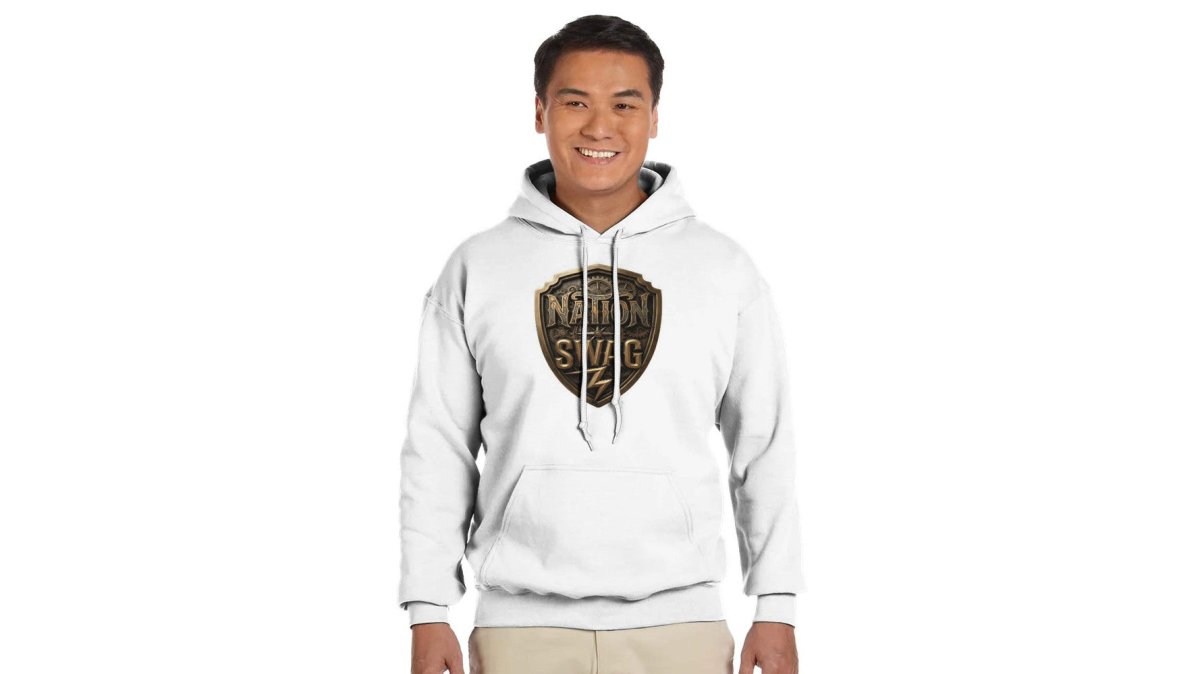
For veterans specifically, the Veteran Shield Strength Hoodie at $45.18 uses the same heavy blend construction with a patriotic lightning bolt design built for daily wear and physical work.
If you want the most versatile option, the Classic Unisex Pullover Hoodie | Gildan 18500 at $43.18 is the workhorse: 50% cotton, 50% polyester, double-lined hood, front pouch pocket, and air jet yarn for a softer feel and reduced pilling. It is the blank we trust most for everyday rotation.
| Hoodie | Price | Weight Class | Best For |
|---|---|---|---|
| Shield Strength Hoodie UNSEXED | $43.18 | Heavyweight | Everyday statement wear |
| Veteran Shield Strength Hoodie | $45.18 | Heavyweight | Veterans, physical work |
| Classic Unisex Pullover (Gildan 18500) | $43.18 | Heavyweight | Versatile daily rotation |
One honest limitation: heavyweight fabric takes longer to dry after washing, so plan for a full day of air drying rather than an hour in a machine.
The real challenge with heavyweight vs lightweight christian hoodies is not picking a side, it is matching the fabric to how you actually live. Most people need one of each, and the wrong choice shows up as a hoodie that sits in the drawer half the year. Nation Swag Designs builds its collection on heavy blend Gildan and Bella + Canvas blanks, with unisex sizing, faith-based and patriotic graphic designs, and air jet yarn that resists pilling wash after wash. Get started with Nation Swag Designs and put a hoodie in your rotation that holds its shape, its print, and its meaning for years.
Frequently Asked Questions
Is an 8 oz hoodie considered heavyweight or lightweight?
An 8 oz hoodie sits in the lightweight-to-midweight range, not heavyweight. At 8 oz, you get a lighter layering piece that works well for mild weather, but it will not hold a boxy oversized silhouette the way a fleece-back hoodie does. If you want that structured, heavy-duty feel, look for heavier options.
What does a heavyweight hoodie mean for warmth and layering?
A heavyweight hoodie uses denser fabric, usually a cotton-poly blend with a fleece back, which traps more air and blocks wind better than a lightweight option. That density makes it a solid standalone layer in cool weather and a good mid-layer under a jacket in winter. Lightweight hoodies work better as a layering piece over a t-shirt when temperatures are mild. Match the garment weight to your climate, not to a marketing label.
Does fabric weight impact the quality of screen-printed designs?
Yes. Heavier fabric gives screen printing a more stable surface, so the ink sits cleaner and resists cracking through repeated washes. Lightweight knits flex more, which can stress the print over time. That said, print durability also depends on curing and wash care. Turning the garment inside out, washing cold, and tumble drying low will extend the life of any graphic, whether it is on a 6 oz tee or a 10 oz hoodie.
Which hoodie weight is best for layering in colder weather?
A midweight or heavyweight hoodie is the sweet spot for cold-weather layering. It adds warmth without bulking up so much that it fights your jacket. Pair a heavyweight cotton blend hoodie with a moisture-wicking base layer underneath, and you get thermal insulation plus breathability. Lightweight hoodies are better for fall and spring, when you want coverage without overheating.
How do I wash graphic hoodies without ruining the print?
Turn the hoodie inside out, wash in cold water on a gentle cycle, and use a mild detergent. Skip fabric softener, which coats the fibers and dulls the print. Tumble dry on low or hang dry to reduce shrinkage and cracking. For screen-printed or embroidered Christian hoodies, avoid ironing directly on the graphic. Following these steps protects both the fabric hand-feel and the design for years of wear.