
Table of Contents
- What Makes a Graphic Hoodie Durable
- Best Fabric for Hoodies: Material Composition Matters
- Understanding Print Methods and Print Adhesion
- How to Wash Graphic Hoodies to Prevent Fading
- Evaluating Stitching and Construction Quality
- Hardware Quality and Drawstring Durability
- Fit and Sizing: Getting the Right Hoodie for Your Build
- Your Durability Checklist for Graphic Hoodies
Last Updated: August 17, 2026
What Makes a Graphic Hoodie Durable
A durable graphic hoodie combines three essential elements: quality fabric construction, print adhesion that survives repeated washing, and stitching that holds up under everyday wear. The difference between a hoodie that lasts two seasons and one that lasts five comes down to how these components work together.
Most people focus only on fabric weight and ignore the details that actually determine longevity. A heavyweight hoodie made from low-quality cotton will pill, fade, and lose shape faster than a mid-weight blend with superior construction. The print method matters just as much as the graphic design itself. A poorly applied screen print will crack and peel within weeks, while a properly executed direct-to-garment print can survive dozens of wash cycles.
Nation Swag Designs sources from trusted brands like Gildan and Bella + Canvas specifically because these manufacturers understand the relationship between material composition, construction standards, and real-world durability. The key to durability isn't complexity, it's precision at every step: the GSM weight of the fabric, the stitch density at seams, the quality of hardware like drawstrings, and the care instructions you follow after purchase.
Best Fabric for Hoodies: Material Composition Matters
The fabric foundation determines everything that follows. Cotton remains the preferred base for graphic hoodies because it offers breathability, comfort, and a natural hand-feel that synthetic alternatives struggle to match. However, pure 100% cotton shrinks unpredictably and loses shape over time.
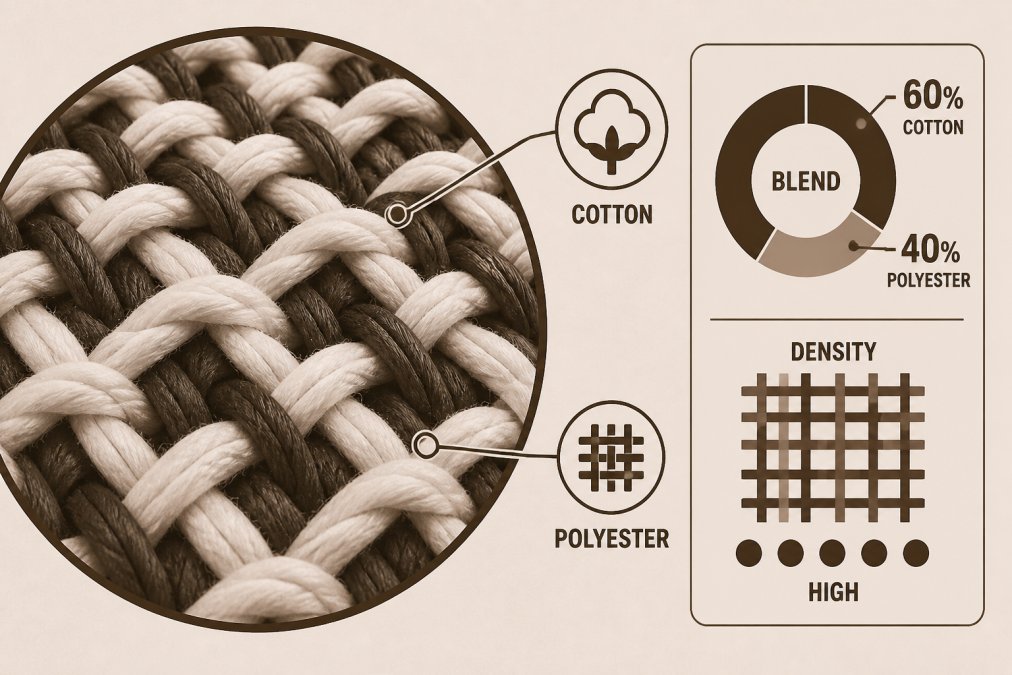
Cotton-polyester blends solve this problem. A 50/50 or 60/40 cotton-poly blend retains the comfort of cotton while adding polyester's shrink resistance and durability. Polyester also improves colorfastness, meaning the fabric holds dye better and resists fading from repeated washing and UV exposure.
Ring-spun cotton, a higher-grade spinning process, creates stronger, softer yarn than conventional spinning. Hoodies made from ring-spun cotton feel more luxurious and wear longer because the fibers are more tightly twisted and resistant to pilling.
GSM (grams per square meter) measures fabric weight and density. The sweet spot for durability is 260-300 GSM. This weight provides thermal insulation, resists pilling, and maintains structure wash after wash.
Heavyweight vs Lightweight Hoodies: Which Lasts Longer
Heavyweight hoodies outlast lightweight versions in nearly every scenario, assuming equal construction quality. The thicker fabric resists pilling, maintains its shape through multiple wash cycles, and provides better thermal insulation for extended wear. A heavyweight hoodie at 280+ GSM feels substantial and the extra material means more fibers per square inch, which translates to better durability when the garment experiences friction from body movement, washing machines, or daily wear.
The drawback is that heavyweight hoodies take longer to dry and can feel restrictive if the fit isn't generous. This is why sizing matters with heavyweight garments. If durability is your priority, heavyweight is the clear choice. Nation Swag Designs emphasizes heavyweight construction precisely because the target audience, veterans, patriots, and those with active lifestyles, needs apparel that performs under real-world conditions.
Cotton-Polyester Blends vs Pure Cotton
Pure cotton offers superior comfort and breathability but comes with shrinkage risk and lower colorfastness. A 100% cotton hoodie might shrink 3-5% in the first wash if not pre-shrunk, and the dye can fade noticeably after 10-15 washes, especially if washed in hot water.
A 60/40 cotton-polyester blend addresses these weaknesses. The polyester prevents excessive shrinkage, keeps colors vibrant longer, and adds durability without sacrificing the comfort that cotton provides. The blend also dries faster, which matters if you're washing frequently. Quality blends use polyester strategically to enhance performance without changing the tactile experience.
Understanding Print Methods and Print Adhesion
The print method determines whether your graphic survives its first month or lasts for years. Print adhesion, how well the ink bonds to the fabric, is the critical durability factor. A print with poor adhesion will crack, peel, and fade regardless of the underlying hoodie quality. A properly executed print becomes part of the garment, surviving dozens of wash cycles without visible degradation.
Screen Printing vs Direct-to-Garment Printing
Screen printing involves pushing ink through a mesh screen onto the fabric. When executed properly, the ink sits on top of the fabric and bonds through heat curing. Screen-printed graphics are durable, vibrant, and cost-effective for bulk orders. The limitation is that screen printing works best for designs with solid colors and clear separation between colors.
Direct-to-garment (DTG) printing uses inkjet technology to apply ink directly to the fabric. The ink penetrates the fabric fibers rather than sitting on top. DTG excels at reproducing complex, photographic designs with unlimited colors. However, DTG prints typically fade noticeably after 20-30 washes, though advances in ink chemistry are improving this.
For graphic hoodies, screen printing remains the durability standard. The ink cures at high temperatures, creating a permanent bond with the fabric. A screen-printed graphic on a quality hoodie will maintain its appearance through 50+ wash cycles. Nation Swag Designs prioritizes screen printing because the patriotic and faith-based designs that resonate with the target audience demand longevity and visual impact.
How to Wash Graphic Hoodies to Prevent Fading
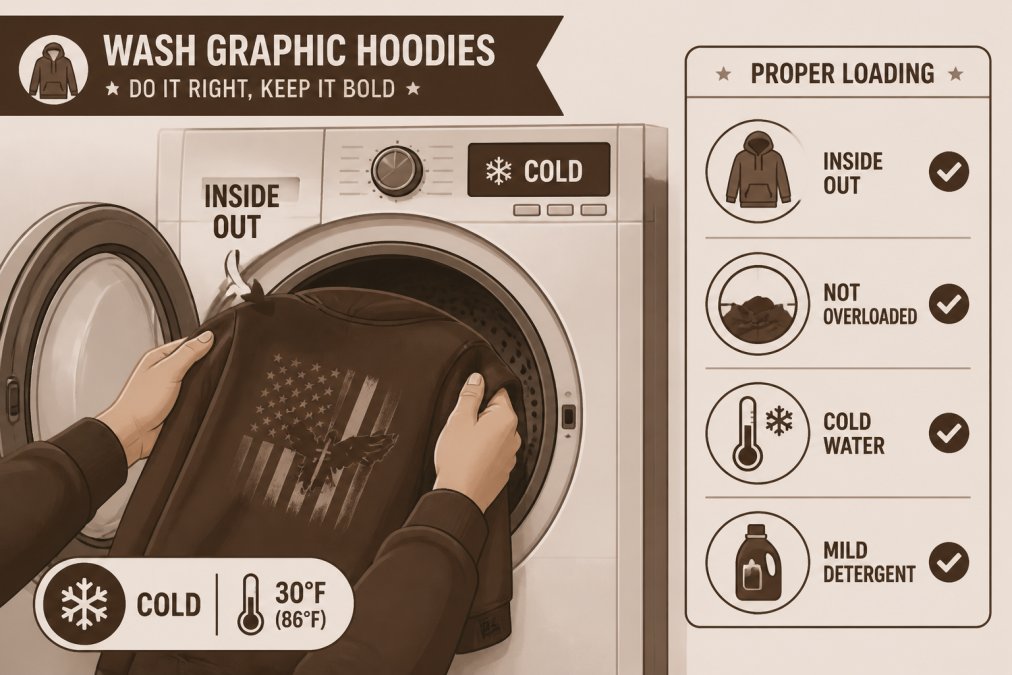
Washing technique determines whether your graphic hoodie fades after five washes or stays vibrant for years. Turn your hoodie inside out before every wash. This single step dramatically extends print life by reducing direct friction between the graphic and the washing machine drum.
Use cold water exclusively. Hot water accelerates dye bleeding and degrades polyester fibers. According to the American Cleaning Institute's fabric care guidelines, cold water washing extends the life of printed graphics by preventing ink migration and color bleeding.
Wash with like colors. A new graphic hoodie should be washed separately for the first 2-3 cycles to prevent dye transfer to lighter garments. After that, wash with similarly colored items.
Wash Temperature and Cycle Selection
Cold water (60-80°F) is the optimal temperature for graphic hoodies. Use a gentle or delicate cycle, not the standard heavy-duty cycle. A gentle cycle uses slower agitation and shorter spin times, reducing mechanical stress on the fabric and print.
Avoid bleach entirely, even oxygen-based bleach. Bleach weakens fibers and can cause unexpected color changes in printed graphics. Use a mild, color-safe detergent at the recommended amount. More detergent doesn't clean better and can leave residue that affects color.
Water hardness affects colorfastness. If you have hard water, consider using a water softener additive in the wash cycle.
Drying Methods That Preserve Color and Shape
Air drying is the gold standard for graphic hoodies. Hang the hoodie on a clothesline or drying rack in a well-ventilated area, away from direct sunlight. Ultraviolet light fades prints and dyes.
If you must use a dryer, use low heat exclusively. A low-heat dryer cycle should take 30-45 minutes. Remove the hoodie while slightly damp and lay it flat to finish drying. Never use high heat or extended dryer cycles.
Reshape the hoodie while it's still damp by laying it flat on a clean surface and gently stretching it to its original dimensions. This prevents the neck from stretching and maintains the overall fit.
Evaluating Stitching and Construction Quality
Stitching quality determines whether seams hold or fail under stress. Examine the seams closely. Quality stitching is straight, consistent, and tight, with no loose threads or gaps between stitches. The stitch density (stitches per inch) should be high enough that you can't see the fabric between individual stitches, 12-16 stitches per inch is the standard.
Run your finger along the seams. They should feel smooth and secure, not loose or bumpy. The neck binding and armhole seams experience the most stress during wear and washing and should be reinforced with double stitching or a stronger thread weight. Check that the ribbed cuffs are firmly attached.
Flat-felled seams are superior to single-needle seams. A flat-felled seam folds the fabric edges and stitches them twice, creating a stronger, more durable joint. Look at the hood construction, it should be attached with reinforced stitching that extends all the way around the opening.
Hardware Quality and Drawstring Durability
Drawstrings and metal hardware seem like minor details until they fail. Drawstrings should be made from a durable material, typically a cotton-poly blend or nylon webbing, and thick enough to not fray when pulled repeatedly.
Check the metal eyelets or grommets where the drawstring passes through the hood. These should be made from stainless steel or powder-coated metal that resists corrosion. Cheap eyelets rust or corrode, staining the fabric and eventually breaking. The drawstring should be securely stitched to the hood fabric, not just inserted loosely.
Zipper quality (if applicable) matters equally. A full-zip hoodie should have a high-quality zipper with smooth operation. YKK and Riri are reliable zipper manufacturers. The cuff ribbing should be securely stitched and reinforced at the seams.
Fit and Sizing: Getting the Right Hoodie for Your Build
Proper fit affects durability in unexpected ways. A hoodie that's too tight will experience excessive stress at seams and may develop tears. A hoodie that's too loose will bunch and fold, creating friction that accelerates wear.
The ideal fit allows for one layer of clothing underneath without restriction. The sleeves should end at your wrist bone. The body length should reach your hip. Shoulder seams should sit at the edge of your shoulder, not down your arm.
Nation Swag Designs emphasizes unisex sizing, which matters because patriotic and faith-based designs appeal to a broad audience. Unisex cuts are typically roomier than fitted cuts, providing comfort without the tight stress points that compromise durability. If you're between sizes, size up for heavyweight hoodies.
Your Durability Checklist for Graphic Hoodies
Use this checklist when evaluating a durable graphic hoodie before purchase:
| Factor | What to Check | Durability Signal |
|---|---|---|
| Fabric Composition | Material blend and GSM weight | 60/40 cotton-poly, 260-300 GSM minimum |
| Fabric Quality | Feel and appearance | Soft, no pilling, consistent color |
| Print Method | Screen printing or DTG | Screen printing preferred, raised texture |
| Print Adhesion | Graphic appearance and flexibility | Slightly raised, no cracks when fabric bends |
| Seam Quality | Stitch consistency and density | Straight, tight, 12-16 stitches per inch |
| Seam Reinforcement | High-stress areas like neck and hood | Double stitching or flat-felled seams |
| Hardware | Drawstring and metal eyelets | Stainless steel, securely attached |
| Cuff Ribbing | Elasticity and attachment | Firm, no loose stitching |
| Fit | Sleeve length, body length, shoulder seams | Proper alignment, no excessive tightness |
| Care Instructions | Washing and drying guidance | Cold water, gentle cycle, air dry recommended |
Before purchasing, turn the hoodie inside out and examine the seams closely. A quality manufacturer has nothing to hide. Check that the print feels durable by gently flexing the graphic area, it should move with the fabric, not crack or peel.
Ask about the specific brands used. Nation Swag Designs sources from Gildan and Bella + Canvas because these manufacturers maintain consistent quality standards. Read the care label carefully. If it recommends hot water or high-heat drying, that's a durability red flag. The price point often reflects durability, the most durable hoodies require investment in materials and construction.
Choosing a durable graphic hoodie comes down to understanding the relationship between fabric composition, print adhesion, construction quality, and care. A hoodie built from quality materials and properly constructed will outlast cheaper alternatives by years. Nation Swag Designs focuses on sourcing from trusted manufacturers and emphasizing heavyweight construction specifically because durability matters to the veterans and patriots who wear these designs. When you invest in a durable graphic hoodie, you're buying a garment that expresses your identity while actually lasting long enough to be worth wearing.
Frequently Asked Questions
How do I know if a graphic hoodie will fade after washing?
Durable graphic hoodies use high-quality print adhesion methods like screen printing, which bonds ink deeply into fabric fibers. Check the print by rubbing it gently, quality prints feel smooth and integrated, not plasticky or raised. Before buying, ask about the printing method used. Wash in cold water inside-out, and avoid the dryer for graphic areas. Graphic hoodies made with pre-shrunk, heavyweight fabric and proper print curing resist fading significantly better than lightweight alternatives.
What's the difference between heavyweight and lightweight hoodies for durability?
Heavyweight hoodies typically weigh 10-14 ounces and offer superior durability due to denser fabric construction, thicker seams, and greater resistance to pilling and wear. Lightweight hoodies (7-9 ounces) are more breathable but prone to faster deterioration in high-stress areas. For durable graphic hoodies, heavyweight options provide longer garment longevity, better color retention, and improved thermal insulation. Heavyweight fabric also supports better print adhesion and resists shrinkage more effectively after repeated wash cycles.
How do GSM and fabric weight affect how long a hoodie lasts?
GSM (grams per square meter) directly measures fabric density and durability. Higher GSM indicates thicker, more durable fabric, typically 400+ GSM for quality hoodies. Fabric weight in ounces tells a similar story: 10+ ounces signals a durable, long-lasting garment. Higher GSM and weight mean better resistance to pilling, fading, and tearing. They also improve seam strength and overall garment longevity. When choosing durable graphic hoodies, prioritize options with GSM or weight specifications clearly listed.
Should I choose ring-spun cotton or regular cotton for durability?
Ring-spun cotton is significantly more durable than regular cotton because the fiber is twisted tighter during processing, creating stronger yarn with fewer loose fibers. This results in less pilling, better color retention, and longer overall garment life. Ring-spun cotton also provides a softer hand-feel and superior breathability. For durable graphic hoodies, ring-spun cotton blends (especially cotton-polyester combinations) offer the best balance of durability, comfort, and fade resistance compared to standard cotton alternatives.
This article was written using GrandRanker