
Table of Contents
- Why the Right Hanger Matters for Graphic T-Shirts
- How to Prevent Hanger Bumps on T-Shirts
- Velvet vs Plastic Hangers for T-Shirts: Which Wins
- Clothing Care for Screen Printed Shirts
- Hanger Material Considerations for Heavyweight Cotton
- Maximizing Closet Space Without Compromising Your Graphics
- Frequently Asked Questions
Last Updated: September 17, 2026
Why the Right Hanger Matters for Graphic T-Shirts
Choosing the best hangers for graphic t-shirts isn't just about organization, it's about protecting your investment. The best hangers for graphic t-shirts prevent damage that cheaper options allow, keeping your graphics crisp and your fabric intact for years.
Most people grab whatever hanger is available and wonder why their favorite tees develop shoulder bumps within months. The wrong hanger creates pressure points that stretch fabric, distort necklines, and can crack screen-printed graphics. A quality hanger distributes weight evenly, supports the garment's natural shape, and preserves both the fabric tension and the artwork.
At Nation Swag Designs, we understand that graphic tees, especially those with bold patriotic, faith-based, or tactical designs, deserve proper care. Heavy-weight cotton from brands like Gildan and Bella + Canvas holds up well, but only if you store them correctly. The difference between a hanger that works and one that damages comes down to material, design, and how the hanger grips your garment.
How to Prevent Hanger Bumps on T-Shirts
Hanger bumps form when the hanger's edge presses into the fabric, creating permanent indentations on the shoulders. These dimples aren't just cosmetic, they signal that the fabric is being stretched and stressed.
The prevention strategy is straightforward: use a hanger with contoured shoulders that distribute weight across a wider surface area. Flat, narrow hangers concentrate pressure into a small point. Rounded or notched shoulders spread that pressure out, protecting the garment from deformation.
Here's what actually works:
- Wide, contoured shoulders that match or exceed the shirt's shoulder width
- Smooth surfaces with no sharp edges or rough spots
- Adequate grip so the shirt doesn't slip and bunch up
- A design that supports the garment without creating tension
When a hanger is too narrow, it acts like a vise. The fabric bunches, the weight concentrates, and within weeks you see those telltale shoulder marks. With graphic tees, this damage is even more visible because the print sits on top of the fabric, and any distortion shows immediately.
| Hanger Feature | Impact on Graphics | Impact on Fabric | Best For |
|---|---|---|---|
| Wide contoured shoulders | Minimal distortion | Even weight distribution | All graphic tees |
| Narrow flat shoulders | Visible dimples | Stretching and stress | Not recommended |
| Non-slip surface | Secure positioning | No bunching | Heavier garments |
| Smooth finish | No snagging | Reduced friction | Delicate prints |
Velvet vs Plastic Hangers for T-Shirts: Which Wins
The velvet versus plastic debate comes down to grip, durability, and what you're trying to protect. Both have legitimate uses, but they excel in different situations, and for graphic tees, the choice has direct consequences for print preservation.
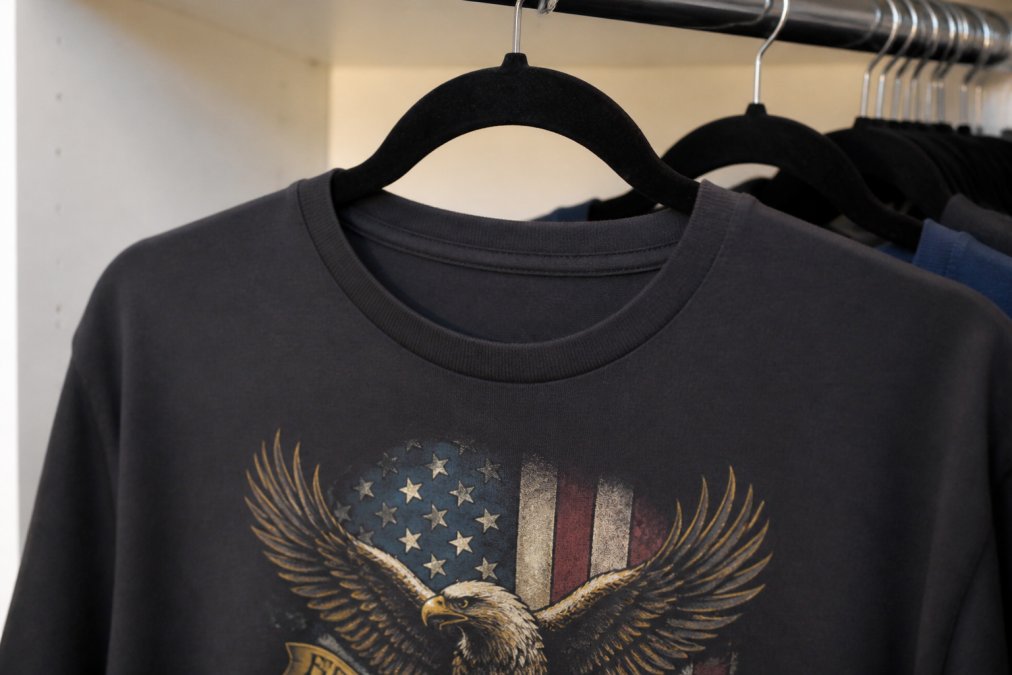
Non-Slip Velvet: Grip Without Damage
Velvet hangers provide superior grip without snagging delicate fabrics or prints. The soft, fuzzy surface creates friction that keeps heavier garments in place, preventing slippage that causes bunching and wrinkles. This matters for graphic tees because movement, even slight shifting, creates micro-friction between the print and the fabric underneath. Over months, this friction can cause screen-printed inks to crack at the edges or peel in high-stress areas like the shoulders.
For graphic tees made from heavyweight cotton, velvet hangers are the practical choice. The material won't damage screen-printed designs or delicate inks. Your shirt stays where you put it, eliminating the need to readjust it every time you open the closet. This stability is critical: a shirt that moves on its hanger experiences repeated stress on the print adhesion, especially if the graphic extends across the shoulder seams. The non-slip surface keeps the garment centered and stationary, distributing any hanging tension evenly rather than concentrating it at pressure points.
Velvet hangers do require occasional cleaning. Dust accumulates in the pile, but a quick brush or lint roller keeps them fresh. They're also more expensive upfront, typically $0.50 to $1.50 per hanger versus $0.10 to $0.30 for plastic, but the longevity and protection justify the cost for items you actually care about. A quality velvet hanger lasts 5-10 years with minimal degradation, while plastic hangers often crack or warp within 2-3 years, especially under the weight of heavyweight cotton.
Plastic Hangers: Budget-Friendly But Risky
Plastic hangers are cheap and available everywhere, which explains their dominance in most closets. The problem: they're often too narrow, have sharp edges, and offer no grip. Your shirt slides around, creating wrinkles and stress points. More importantly, the slippery surface means your graphic tee is in constant micro-motion, rubbing against the hanger and against itself as the garment shifts with temperature changes and air movement in your closet.
For lightweight tees you don't mind replacing, plastic works fine. For graphic t-shirts with meaningful designs, especially heavier-weight pieces, plastic introduces unnecessary risk. The narrow shoulders create those shoulder bumps we talked about.
THE EYE STINGER Unisex Cotton Crew Tee →
Wood Hangers: Premium Support With Trade-Offs
Wooden hangers offer excellent weight capacity and a premium aesthetic, but they're overkill for most graphic tees and introduce unnecessary bulk to your closet. The smooth wood surface provides some grip, but not as much as velvet. They're also heavier, which means more stress on your closet rod if you're hanging many garments. For graphic tees, the added weight and bulk don't translate to better print preservation, velvet achieves the same grip and stability with a slimmer profile.
Clothing Care for Screen Printed Shirts
Screen-printed graphics are durable when handled correctly, but they're also vulnerable to specific damage mechanisms that most storage guides ignore. The ink sits on top of the fabric as a cured polymer layer, which means pressure, heat, friction, and tension can crack or peel the print. Understanding how hanger choice prevents this damage is the key to long-term graphic preservation.
How Hangers Prevent Screen-Print Cracking
Screen-printed inks cure into a flexible film that moves with the fabric, but only to a point. When fabric stretches unevenly or bunches, the print layer can't stretch at the same rate, causing the ink to crack. This is especially true for prints with fine details, gradients, or large solid color areas that lack the flexibility of thinner line work.
Washing and Drying: The Other Half of Print Care
The real threats to screen prints come during washing and drying. Machine washing in cold water, turning the shirt inside-out, and air-drying preserve prints far longer than hot water and high heat. But that care starts with proper storage, and storage starts with the right hanger.
Seasonal Storage and Print Preservation
For tees stored seasonally, the hanger choice becomes even more critical. A shirt hanging for three months in a closet experiences constant low-level stress from its own weight and from temperature and humidity fluctuations. A narrow or slippery hanger allows the garment to shift slightly with these changes, creating cumulative stress on the print. A wide, non-slip hanger keeps the garment stable through seasonal changes, preventing the micro-damage that compounds over time.
Hanger Material Considerations for Heavyweight Cotton
Heavyweight cotton, the 7.5 oz fabric used in Nation Swag Designs tees like the Dripping Diamond and THE EYE CELESTIAL VISION, requires hangers that can support real weight. Lightweight plastic hangers bend under the load, and narrow hangers concentrate pressure too much.
Maximizing Closet Space Without Compromising Your Graphics
Smart storage means vertical organization. Hanging tees takes up more space than folding, but it protects graphics better. The compromise is choosing slim-profile hangers that save space while still providing proper support.
For long-term storage of tees you wear less frequently, consider:
- Hanging them in a separate section of your closet
- Using slim velvet hangers to maximize space
- Keeping the closet dark to prevent fading
- Ensuring air circulation to prevent mustiness
Frequently Asked Questions
Is it better to hang or fold graphic t-shirts?
Hanging graphic t-shirts is generally better than folding if you use the right hanger. Proper hangers with notched shoulders and non-slip surfaces prevent creases and preserve the graphic's shape. However, long-term storage of vintage or delicate prints may benefit from flat folding in acid-free tissue. For everyday access and closet efficiency, hanging with quality hangers protects both the garment's structure and the integrity of screen-printed designs.
How do you hang t-shirts without getting hanger marks on the shoulders?
Use hangers with contoured or notched shoulders that distribute weight evenly across the fabric. Non-slip velvet hangers grip the material gently, preventing sliding while reducing pressure points that cause shoulder bumps and dimples. Ensure the hanger width matches the shirt's shoulder width, too narrow and the fabric bunches, too wide and it stretches. Avoid wire hangers and cheap plastic options that create visible indentations, especially on heavyweight cotton where the fabric retains marks longer.
What's the best way to store graphic t-shirts to prevent fading and damage?
Store graphic t-shirts on velvet or wooden hangers with proper shoulder support to prevent stretching and hanger bumps. Keep them away from direct sunlight, which fades screen-printed designs over time. Use hangers with a swivel hook for easy access without handling the graphic area repeatedly. For long-term storage, consider flat folding with acid-free tissue rather than hanging, especially for vintage or rare prints. Always wash in cold water and tumble dry on low heat before storage to maintain print durability.
Are velvet hangers really better for graphic t-shirts than wood or plastic?
Velvet hangers outperform plastic for graphic t-shirts because their non-slip surface grips fabric securely without sliding, reducing the shoulder stretching that damages both the garment shape and printed designs. Wooden hangers offer durability and aesthetic appeal but require proper width matching and can be heavier. Plastic hangers are budget-friendly but slip easily, causing garments to bunch and creating visible shoulder dimples that distort graphics. For graphic tees, velvet's combination of grip, lightweight design, and fabric protection makes it the top choice for daily wear storage.