
Table of Contents
- Why Heavyweight Hoodies Last Longer: The Science Behind Durability
- Heavyweight vs. Lightweight Hoodie Durability: A Direct Comparison
- Best Materials for Durable Hoodies: What to Look For
- What Makes a Hoodie High Quality: Construction and Craftsmanship
- How to Make Hoodies Last Longer: Practical Care and Maintenance
- The Evolution and Investment Value of Heavyweight Hoodies
- Conclusion: Building a Wardrobe That Lasts
Why Heavyweight Hoodies Last Longer: Durability Explained
Last Updated: July 23, 2026
Understanding why heavyweight hoodies last longer comes down to fabric science, construction quality, and material density. At Nation Swag Designs, we've seen firsthand how the right hoodie can outlast cheaper alternatives by years, sometimes a decade or more. The difference isn't marketing hype; it's rooted in how fabric is made and how garments are constructed to withstand repeated wear, washing, and everyday stress.
Understanding Fabric Density and GSM
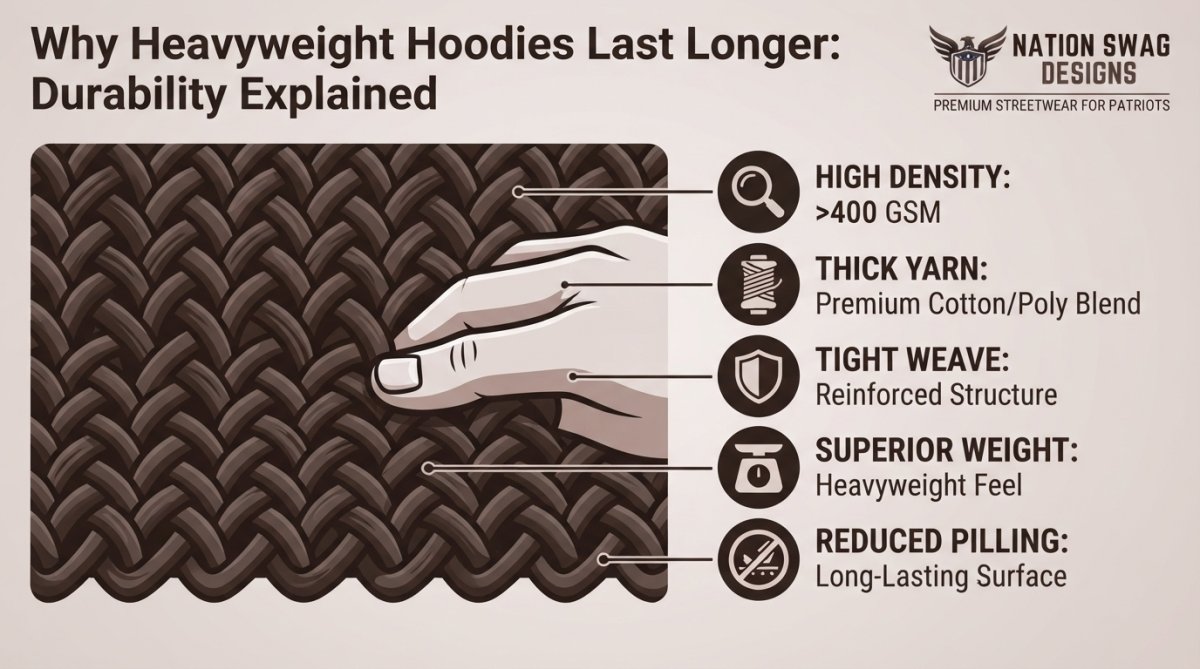
Fabric density is measured in GSM, or grams per square meter. A heavyweight hoodie typically ranges from 280 to 450 GSM, while lightweight alternatives often fall between 150 and 200 GSM. The higher the GSM, the more material is packed into every square inch of fabric, creating greater resistance to wear.
A 350 GSM hoodie contains roughly double the material of a 175 GSM hoodie. That extra material creates a thicker barrier against abrasion, pilling, and degradation over time. When you wash, dry, and wear a garment repeatedly, surface fibers experience friction. Denser fabrics have more fiber depth to lose before structural integrity fails. A hoodie with 400 GSM will typically outlast one with 250 GSM by a measurable margin, assuming both are made from similar base materials.
How Denser Material Resists Wear and Tear
Wear and tear happens at the fiber level. Every wash cycle and brush against a rough surface creates micro-abrasion on the fabric surface. Lightweight fabrics succumb quickly because there's simply less material to lose before the weave becomes visibly compromised.
Denser material resists wear through sheer mass. When a heavyweight hoodie's outer fibers pill or fray, multiple layers of intact fibers remain beneath them. The garment maintains its appearance and structural integrity much longer. Lightweight hoodies often show visible wear within 10-20 washes; heavyweight alternatives can look nearly new after 50+ washes.
The shape retention of denser fabrics also contributes to durability. A lightweight hoodie stretches out after a few wears, losing its structured drape. A heavyweight hoodie maintains its form because the denser weave resists elongation. French terry construction, a common choice for heavyweight hoodies, amplifies these benefits through its looped pile structure that traps air while maintaining density.
Heavyweight vs. Lightweight Hoodie Durability: A Direct Comparison
The durability gap between heavyweight and lightweight hoodies is substantial and measurable across multiple factors.
| Factor | Heavyweight Hoodie | Lightweight Hoodie |
|---|---|---|
| Typical GSM | 300-450 | 150-200 |
| Expected lifespan | 5-10+ years | 1-3 years |
| Pilling resistance | High (multiple fiber layers) | Low (surface fibers exposed) |
| Fade resistance | Excellent (dye penetrates deeper) | Fair (color fades within 20-30 washes) |
| Shape retention | Maintains form for years | Stretches out within 10-15 wears |
| Washing durability | Tolerates frequent washing | Degrades visibly after 15-20 washes |
Longevity and Shape Retention
A heavyweight hoodie maintains its structured drape and fit because the denser weave resists elongation. The ribbing at cuffs and hem holds tight longer. After a year of regular wear, a quality heavyweight hoodie looks almost identical to day one.
Lightweight hoodies begin losing shape immediately. Within weeks, the garment fits differently and less defined. This shape loss is irreversible; even careful washing won't restore the original fit. Nation Swag Designs sources hoodies from Gildan and Bella + Canvas specifically because both brands prioritize denser constructions that maintain shape through years of wear.
Resistance to Pilling and Fading
Pilling occurs when short fibers on the fabric surface break loose and form small balls. Lightweight fabrics pill aggressively because surface fibers are exposed and loosely held. After 10-15 washes, a lightweight hoodie often shows visible pilling across the chest and shoulders.
Heavyweight fabrics resist pilling because the weave is so tight that loose fibers remain locked in place. Even after 50+ washes, heavyweight hoodies show minimal pilling. Fading is another durability marker. Lightweight fabrics fade quickly because dye doesn't penetrate as deeply into thin fibers. A black lightweight hoodie becomes noticeably gray within 20-30 washes. Heavyweight hoodies fade much more slowly because the dye has more fiber to bind to, and the density protects inner fibers from UV exposure and wash cycles.
Best Materials for Durable Hoodies: What to Look For
Material choice is as important as fabric weight. The best durable hoodies combine heavyweight construction with fibers selected specifically for longevity.
Cotton, Fleece, and Blends: Comparing Durability
Pure cotton hoodies offer excellent durability when constructed at high GSM. Cotton softens with washing rather than degrading. The downside: pure cotton can shrink if not cared for, and it takes longer to dry.
Fleece, typically polyester-based, delivers superior durability in some ways. Fleece resists pilling better than cotton and doesn't shrink. However, fleece can pill if the weave isn't dense enough, and it retains odors more readily than cotton.
Cotton-polyester blends represent the optimal balance for durability. An 80/20 or 70/30 cotton-polyester blend combines cotton's comfort and breathability with polyester's durability and shape retention. Most premium hoodies use some variation of this blend, often with a cotton-rich body and polyester-heavy fleece interior lining.
French Terry and Premium Construction
French terry is a specific fleece construction that creates a smooth exterior and looped interior. The loops trap warmth while the smooth face resists pilling and snagging. The looped structure provides cushioning that extends garment life through gentler compression-recovery cycles. After 100+ wears, a French terry hoodie often looks better than a cheaper flat-knit alternative after 20 wears.
Premium construction extends beyond fabric choice. High-quality hoodies feature reinforced seams at stress points like armholes and hood attachment. The stitching uses stronger thread and tighter stitches (often 10+ stitches per inch rather than 6-8). Ribbing is thicker and more densely knit.
:::pro-tip Inspect the seams and ribbing before purchasing. Tight, even stitching and thick ribbing indicate a hoodie built to last. Loose stitching or thin, flimsy ribbing is a red flag that the garment will fail within 1-2 years. :::
What Makes a Hoodie High Quality: Construction and Craftsmanship
A high-quality hoodie results from dozens of small decisions made during design, material selection, and manufacturing.
Stitching, Ribbing, and Structural Integrity
Stitching quality is non-negotiable for durability. A hoodie with loose, irregular stitching will develop seam failures within weeks. Quality hoodies use reinforced stitching at critical stress points: armholes, shoulder seams, hood attachment, and the base of the front pocket.
Ribbing, the elastic knit fabric at cuffs, hem, and hood opening, determines how long a hoodie maintains its shape. Cheap ribbing stretches out and never recovers. Premium ribbing is thicker, uses higher-quality elastic fiber, and maintains tension through dozens of washes. A hoodie with shot ribbing has reached functional end-of-life.
Structural integrity also depends on how the hoodie is designed. A well-designed hoodie distributes stress evenly across the garment. A quality hood uses the same heavyweight fabric as the body, reinforced stitching, and structural support that keeps it shaped even after repeated washing.
Ethical Production and Sustainable Practices
Durability and sustainability are linked. A hoodie that lasts 10 years requires far fewer replacements than one that lasts 1 year. Factories that invest in worker training and quality control produce better garments. Sustainable materials like organic cotton and recycled polyester often improve durability as well.
Nation Swag Designs partners with Gildan and Bella + Canvas specifically because both brands maintain strict quality standards and ethical production practices. This commitment to quality translates directly to hoodies that outlast cheaper alternatives.
How to Make Hoodies Last Longer: Practical Care and Maintenance
Even a quality heavyweight hoodie requires proper care to achieve its full lifespan.
Washing, Drying, and Preventing Shrinkage
Wash hoodies in cold water using gentle detergent. Cold water prevents dye bleeding and reduces shrinkage risk. Turn hoodies inside out before washing to protect the exterior surface from abrasion.
Air drying is superior to machine drying. Heat from the dryer damages fibers and causes shrinkage. Hang the hoodie on a hanger or lay it flat on a clean surface. Avoid direct sunlight, which can fade colors. If you must use a dryer, use the lowest heat setting and remove the hoodie while still slightly damp.
A quality heavyweight hoodie will shrink 3-5% in the first wash if not cared for properly. To minimize shrinkage: wash in cold water, use gentle detergent, and air dry. After the first wash, shrinkage stabilizes and subsequent washes cause minimal additional shrinkage.
DIY Repair Techniques and Fabric Care Tools
Small repairs dramatically extend hoodie lifespan. For loose stitching, use a needle and thread matching the hoodie color to re-stitch the loose seam using small, tight stitches. Reinforce stress points like armholes before problems develop.
For small holes, a fabric patch works well. Cut a patch from similar-colored fabric and apply fabric glue or use a sewing machine to attach it. The patch should extend at least 1 inch beyond the hole in all directions.
A fabric shaver removes pilling without damaging the underlying fabric. Run the shaver gently over pilled areas, and loose fiber balls will collect in the device. This cosmetic repair restores the hoodie's appearance and costs less than $20.
The Evolution and Investment Value of Heavyweight Hoodies
Modern heavyweight hoodies use advanced fleece constructions like French terry that balance weight with comfort, making them viable for everyday wear. The investment value is substantial. A premium heavyweight hoodie costs 2-3 times more than a cheap lightweight alternative, but if the heavyweight hoodie lasts 8 years and the lightweight hoodie lasts 1 year, the cost per year of wear is dramatically lower for the heavyweight option.
A hoodie that maintains its shape, color, and feel for years is more pleasant to wear than one that degrades visibly within months. For patriots and veterans, the core audience for Nation Swag Designs, quality apparel carries additional significance. Wearing a hoodie that represents your values and lasts for years creates a stronger connection to the garment and the message it carries.
Conclusion: Building a Wardrobe That Lasts
Choosing hoodies that actually last requires understanding fabric science, recognizing quality construction, and committing to proper care. The difference between a hoodie that lasts one year and one that lasts ten is rooted in GSM, material choice, stitching quality, and maintenance practices.
When you invest in a heavyweight hoodie from Nation Swag Designs, you're getting garments constructed from trusted manufacturers like Gildan and Bella + Canvas, featuring high-GSM fabric, reinforced stitching, and premium ribbing that maintains shape through years of wear. Combined with proper care, cold water washing, air drying, and minor repairs, these hoodies become reliable pieces of your wardrobe that express your identity and values for a decade or more.
According to textile durability research from the Textile Exchange, garments made from high-GSM fabrics with reinforced construction show measurable durability advantages over lightweight alternatives. The American Apparel and Footwear Association's 2026 sustainability report confirms that longer-lasting garments reduce overall environmental impact by decreasing replacement frequency. For those prioritizing durability in their wardrobe, Consumer Reports' guide to evaluating fabric quality provides additional technical evaluation methods beyond GSM and construction inspection.
Frequently Asked Questions
What is GSM and why does it matter for hoodie durability?
GSM stands for grams per square meter, a measurement of fabric density and weight. Higher GSM indicates a denser, thicker material with more fibers per square inch. Heavyweight hoodies typically feature 300+ GSM, which directly correlates to increased durability, better shape retention, and greater resistance to wear and tear. Denser fabrics resist pilling and maintain their structure through repeated washing and wearing, making GSM a critical indicator of hoodie longevity.
How do I prevent my heavyweight hoodie from shrinking in the wash?
To prevent shrinkage, always wash your heavyweight hoodie in cold water and air dry instead of using a dryer. High heat causes fibers to contract, especially in cotton-based blends. Turn the hoodie inside out before washing to protect graphics and reduce fading. Use gentle detergent and avoid over-drying. Following these care instructions preserves the structured drape and fit that heavyweight hoodies are known for, extending their lifespan significantly.
Are heavyweight hoodies worth the investment compared to lightweight alternatives?
Yes, heavyweight hoodies represent a smart investment for long-term value. While they may cost more upfront than lightweight options, their superior durability means they last years longer with proper care. The denser material resists pilling, maintains shape retention, and withstands frequent wear and washing. For patriots and veterans who demand reliable, quality apparel that can handle active lifestyles, heavyweight hoodies deliver comfort, longevity, and the robust feel that justifies the premium investment.
What's the difference between French terry and regular fleece in heavyweight hoodies?
French terry features a looped pile on one side with a smooth back, offering a premium feel and superior durability compared to regular fleece. French terry provides better insulation, shape retention, and resistance to pilling because the loops are tighter and more densely woven. Regular fleece, while comfortable, tends to pill more easily with wear. For heavyweight hoodies designed to last longer, French terry construction combined with higher GSM creates a sturdier feel and extended longevity.
This article was written using GrandRanker