
Table of Contents
- Understanding Tactical Streetwear Fundamentals
- How to Layer Tactical Clothing for Maximum Impact
- Utility Features and Functional Design Elements
- Techwear Outfit Ideas for Different Occasions
- Tactical Accessories for Men: Balancing Form and Function
- Avoiding the Costume Look: Blending Military Inspiration with Everyday Wear
- Fabric Technology and Care for Long-Lasting Tactical Pieces
- Conclusion
Last Updated: August 16, 2026
Understanding Tactical Streetwear Fundamentals
Tactical streetwear is a style that blends military-inspired design with everyday urban fashion, combining functional utility features with contemporary aesthetics. It's not about looking like you're headed to deployment, it's about incorporating practical design elements, durable fabrics, and purposeful construction into clothing you actually wear to work, run errands, or spend time with friends.
The core appeal lies in the intersection of form and function. Tactical pieces feature reinforced stitching, weather-resistant materials, concealed pockets, and modular storage options that serve real purposes. At the same time, modern tactical streetwear avoids the costume aesthetic by using refined silhouettes, neutral color palettes, and balanced proportions that fit naturally into civilian wardrobes.
Nation Swag Designs understands this balance. Their curated collection of hoodies and crewneck t-shirts, crafted from heavyweight fabrics like those offered by Gildan and Bella + Canvas, provides the durability and comfort that tactical pieces demand. The faith-based and patriotic graphic designs add personal expression without sacrificing the understated utility that defines the category.
The key to mastering how to style tactical streetwear is recognizing that it's not a costume, it's a practical philosophy applied to everyday clothing. Veterans and patriots who value both functionality and meaning in their wardrobes have embraced this approach precisely because it delivers on both fronts. The visual complexity comes from texture, layering, and thoughtful fabric selection, not from excess gear or overwrought details.
How to Layer Tactical Clothing for Maximum Impact
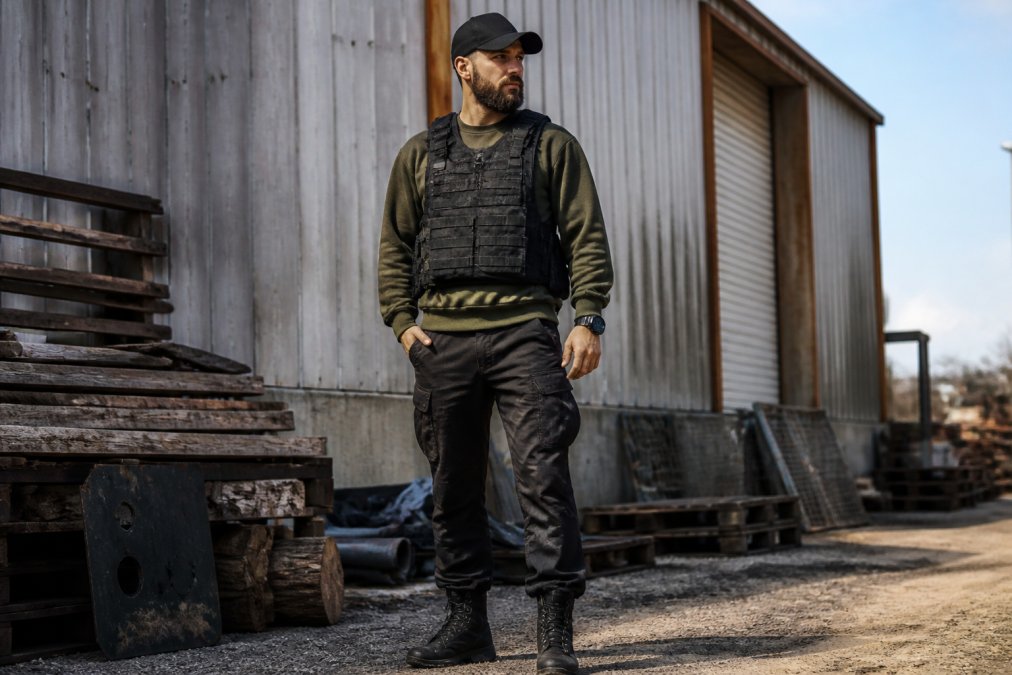
Layering is the foundation of tactical styling. It creates visual depth, adds functional versatility, and allows you to adapt to changing conditions throughout the day. The principle is straightforward: start with a fitted base layer, add a mid-layer for insulation or visual interest, and finish with an outer shell that provides weather resistance or additional utility.
Base Layer Strategy
Your foundation should be a well-fitted crewneck or henley in a neutral tone, black, olive, gray, or tan. This layer hugs your frame without being tight. A properly fitted base layer prevents the bulky, oversized silhouette that undermines tactical styling. Heavyweight fabrics work best here; they hold their shape, resist wrinkles, and develop character over time. The base layer is where you can introduce subtle graphic design if you choose, Nation Swag Designs offers patriotic and faith-based options that add meaning without visual clutter.
Mid-Layer Approach
This is where tactical styling gets interesting. A mid-layer adds both warmth and visual complexity. Consider these options:
- Tactical vest or utility jacket: Open-front vests with MOLLE webbing and modular pockets create immediate visual interest. Wear it unbuttoned over your base layer for a relaxed, layered look.
- Ripstop overshirt: A lightweight ripstop shirt worn open as a layer provides texture and movement. The fabric's durability signals intentional design.
- Fleece or technical pullover: For colder months, a quarter-zip fleece in a coordinating neutral adds warmth without bulk.
- Denim or canvas jacket: A fitted denim or canvas jacket in a dark wash bridges tactical and traditional streetwear seamlessly.
The key is choosing pieces that coordinate in color while contrasting in texture. If your base is a smooth heavyweight crewneck, your mid-layer should introduce ripstop texture, webbing detail, or a different fabric weight.
Outer Shell Considerations
Your outermost layer should provide weather resistance and functional design. DWR (durable water repellent) coatings on jackets and overshirts keep you protected without requiring heavy insulation. Look for pieces with reinforced seams, articulated sleeves for movement, and strategic pocket placement. The outer shell is where utility features like chest pockets, cargo compartments, and concealed storage become both practical and visually defining.
Utility Features and Functional Design Elements
Tactical streetwear distinguishes itself through intentional functional design. These aren't gimmicks, they're features that serve real purposes while creating the visual language that defines the category.
MOLLE Webbing and Modular Storage
MOLLE (Modular Lightweight Load-carrying Equipment) webbing is the grid of straps you see on tactical gear. On streetwear pieces, it's typically decorative or semi-functional, you're not attaching full combat gear, but the webbing allows for small attachments and creates visual interest. A tactical vest with MOLLE webbing worn open over a fitted base layer immediately signals intentional design.
Concealed Pockets and EDC Organization
Everyday carry (EDC) functionality means having accessible, organized storage for essentials. Look for pieces with:
- Interior chest pockets for documents or valuables
- Zippered cargo pockets on pants or shorts
- Hidden phone pockets integrated into seams
- Dedicated compartments for keys, cards, or small tools
These features aren't just practical, they create the silhouette and visual weight distribution that defines tactical styling.
Reinforced Construction and Durability
Tactical pieces feature reinforced stitching at stress points, double-stitched seams, and heavier gauge thread. This construction is visible, you can see the extra stitching lines, which add to the visual complexity. Reinforced crotch seams, reinforced pocket corners, and triple-stitched hems aren't just durable; they're design elements that communicate intentional craftsmanship.
Weather-Resistant Fabrics
DWR coatings, ripstop weaves, and heavyweight cotton blends all contribute to weather resistance without requiring specialized technical fabrics. These materials age gracefully, developing character and patina over time. A ripstop fabric shows texture; a DWR-coated piece shows water beading on the surface, both are visual indicators of functional design.
Techwear Outfit Ideas for Different Occasions
Tactical streetwear adapts across contexts. The same pieces work for casual outings, professional settings, and active pursuits, it's about proportioning and layering differently for each scenario.
Casual Urban Exploration
Start with a fitted heavyweight crewneck in black or olive. Layer an open ripstop overshirt in a complementary neutral. Add cargo pants with visible utility pockets and reinforced construction. Finish with clean boots, minimalist design, quality construction. This outfit reads as intentional without appearing costume-like. The visual weight comes from fabric texture and pocket placement, not excess gear.
Professional-Adjacent Styling
Wear a structured crewneck under a fitted canvas or denim jacket. Choose pants in a neutral with subtle cargo elements, perhaps a single thigh pocket or reinforced construction that's visible but not overwhelming. Add a minimalist watch and quality footwear. This approach keeps tactical elements understated while maintaining the functional aesthetic.
Active and Outdoor Ready
Layer a lightweight technical base under a tactical vest or utility jacket. Pair with articulated cargo pants designed for movement. Add a weather-resistant outer shell. This outfit prioritizes function while maintaining streetwear proportions. The key is avoiding the "full kit" look, you're not geared for deployment, you're dressed for a day that might involve anything.
Seasonal Transitions
Spring and fall allow maximum layering flexibility. A heavyweight crewneck under an open ripstop overshirt works across temperature ranges. Summer requires lighter base layers and breathable fabrics; winter adds insulated mid-layers and weather-resistant shells. Nation Swag Designs' unisex sizing and heavyweight construction works across seasons when you layer thoughtfully.
Tactical Accessories for Men: Balancing Form and Function
Accessories complete tactical styling by adding functional storage and visual detail without tipping into costume territory.
Belts and Waistband Organization
A quality tactical belt with reinforced webbing and a durable buckle serves real purposes, it distributes weight evenly and provides attachment points for small pouches or tools. Choose a belt in a neutral that matches your pants. The belt should be visible but not ornate; the construction quality should speak for itself.
Watches and Wrist Gear
A minimalist watch with a durable band complements tactical styling. Look for watches with clean faces, legible numerals, and quality construction. Avoid overly complicated designs; simplicity reads as intentional. A watch is functional jewelry, it should look like it serves a purpose.
Bags and Carry Solutions
A structured backpack or messenger bag in ripstop or heavyweight canvas works with tactical outfits. Look for pieces with organized compartments, reinforced handles, and weather-resistant construction. The bag should coordinate with your outfit in color while contrasting in texture or detail. Avoid overstuffed or oversized bags; proportion matters.
Footwear Choices
Boots and tactical shoes ground the outfit. Choose pieces with:
- Reinforced toe caps and heel counters
- Quality construction visible in stitching and seams
- Neutral colors that coordinate with your outfit
- Comfortable, supportive construction for all-day wear
Minimalist design reads better than aggressive tread patterns or excessive detail. The shoes should look built for purpose, not decorated with it.
Avoiding the Costume Look: Blending Military Inspiration with Everyday Wear
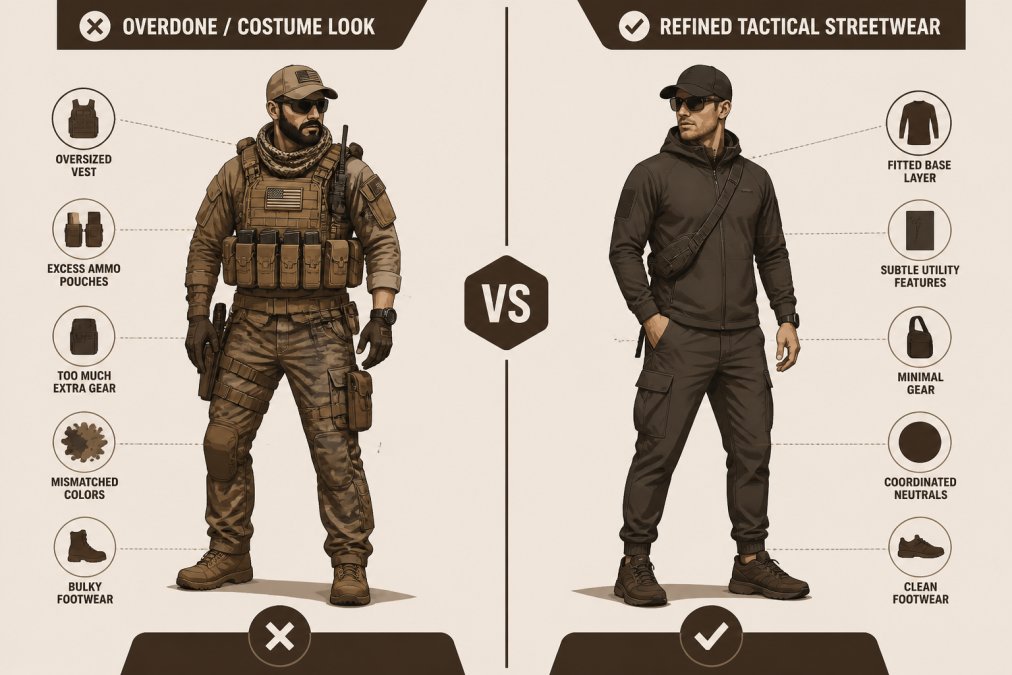
The line between tactical streetwear and costume is proportion and restraint. Many people stumble here by treating tactical pieces like a uniform, adding too many elements, choosing pieces that are too large, or combining pieces that don't work together visually.
The Oversizing Problem
Oversized tactical pieces create a costume silhouette. Your clothes should fit your frame. A tactical vest should sit cleanly over a fitted base layer, not drown you. Cargo pants should taper at the ankle, not billow. Oversized pieces were designed for wearing gear underneath, if you're not doing that, oversizing just looks wrong. Nation Swag Designs' unisex sizing is designed to fit real bodies properly, which is the foundation of avoiding the costume trap.
Color Coordination Matters
A cohesive outfit uses 2-3 coordinating neutrals. Mixing too many colors, black, olive, tan, gray, and brown all in one outfit, reads as costume. Stick to a palette. If your base is black, your mid-layer should be charcoal or dark gray. Your pants can introduce a second neutral. Your outer shell can be a third. This restraint keeps you looking intentional rather than like you raided a surplus store.
Proportion and Silhouette
Tactical styling works when your silhouette is recognizable. Your shoulders should be defined, your torso should have shape, your legs should taper. Layers add visual complexity, but they shouldn't hide your frame entirely. The visual interest comes from texture and detail, not from bulk. A fitted base layer under an open mid-layer creates the right proportions. An oversized everything creates costume.
Graphic Design as Accent, Not Statement
If you choose pieces with graphics, like Nation Swag Designs' faith-based or patriotic designs, let them be an accent, not the focal point. A meaningful graphic on a crewneck worn under a neutral overshirt adds personal expression without overwhelming the outfit. A graphic-heavy piece worn as your base layer, combined with graphic-heavy accessories, reads as trying too hard.
Avoiding Excessive Gear
Tactical costume happens when you add too many functional elements. You don't need ammunition pouches, carabiners, paracord, and tactical patches all at once. Choose 2-3 functional elements that serve your actual needs. A watch, a quality belt, and a structured bag. That's enough. Everything else is accessory.
Fabric Technology and Care for Long-Lasting Tactical Pieces
Tactical pieces are investments. They're built to last, but they require proper care to maintain quality and appearance.
Understanding Technical Fabrics
Ripstop weaves use thicker threads at regular intervals to prevent tears from spreading. This creates visible texture that defines tactical aesthetics. Ripstop is durable but requires gentle care, aggressive washing can damage the weave.
DWR (durable water repellent) coatings repel water without requiring waterproof membranes. They breathe better than fully waterproof fabrics but require periodic reapplication. A DWR-coated piece will eventually lose water resistance; this is normal and expected.
Heavyweight cotton and cotton-blend fabrics develop character over time. They soften with washing, develop fading patterns, and create a lived-in aesthetic that many people prefer. This aging is intentional, it's part of the appeal.
Washing and Maintenance
Tactical pieces require specific care:
- Wash in cold water to prevent fading and fabric stress
- Use gentle detergent; avoid bleach and fabric softener
- Turn pieces inside out before washing to protect graphics and exterior finishes
- Air dry when possible; machine drying can damage DWR coatings and cause shrinkage
- For Nation Swag Designs pieces with graphics, avoid high heat and aggressive agitation
Heavyweight fabrics like those from Gildan and Bella + Canvas used by Nation Swag Designs are forgiving, they resist shrinkage and maintain shape through repeated washing.
Storing Tactical Pieces
Store in a cool, dry place away from direct sunlight. Hang jackets and vests to maintain shape. Fold heavier pieces to prevent stretching. Keep pieces away from heat sources and moisture. Proper storage extends the life of technical coatings and prevents mildew.
Addressing Wear and Damage
Tactical pieces are built to be repaired. Reinforced seams can be re-stitched. Small tears in ripstop can be patched. Graphics may fade or crack over time, this is expected. The durability of pieces from Nation Swag Designs means they're worth maintaining rather than replacing.
Tactical streetwear works because it solves real problems. You need pockets that actually hold things. You need fabrics that stand up to use. You need clothing that expresses who you are, your values, your service, your identity. Nation Swag Designs delivers on all three fronts with heavyweight, durable pieces featuring meaningful graphics that resonate with patriots and veterans. The faith-based and tactical designs combined with quality construction from trusted brands like Gildan and Bella + Canvas create apparel that performs and communicates. Get started with Nation Swag Designs and build a wardrobe that reflects both your practical needs and your values.
Frequently Asked Questions
What's the difference between techwear and tactical streetwear?
Techwear emphasizes technical fabrics and minimalist aesthetics with high-tech performance features like weather-resistant coatings and breathability. Tactical streetwear draws from military-inspired design with visible utility features like MOLLE webbing, concealed pockets, and cargo elements, but maintains an everyday wearable silhouette. Both use functional design, but tactical pieces lean more visibly utilitarian while techwear prioritizes sleek, futuristic lines.
How do I style tactical pants for a casual look?
Pair cargo pants with a fitted crewneck or graphic tee to balance the utilitarian silhouette. Layer with a lightweight jacket or overshirt rather than heavy tactical vests. Choose neutral colors like olive, black, or tan to avoid looking costume-like. Add clean sneakers or boots and keep accessories minimal. The key is letting the cargo functionality speak for itself without adding excessive tactical pieces on top.
What are the essential pieces for a tactical streetwear wardrobe?
Start with heavyweight cargo pants or tactical trousers, a quality crewneck or graphic tee as a base layer, and a tactical vest or overshirt for utility. Add technical outerwear with weather-resistant properties, functional boots, and a tactical backpack or bag. Incorporate MOLLE-compatible accessories gradually. Choose fabrics with DWR coating and ripstop construction for durability. These core pieces provide the foundation to build multiple outfits without overdoing it.
How can you incorporate tactical accessories without overdoing it?
Start with one statement piece like a tactical belt or utility pouch, then build from there. Use concealed pockets in your clothing rather than external gear. Choose accessories in matching colors to create visual cohesion. Avoid stacking multiple MOLLE webbing items on one outfit. Focus on pieces that serve a genuine function, everyday carry items like wallets or small pouches, rather than purely decorative tactical gear. Less is more when maintaining a streetwear aesthetic.
This article was written using GrandRanker