
Table of Contents
- Why Durability Matters in Tactical Apparel
- Understanding Tactical Clothing Fabric Types
- Key Construction Features That Define Quality
- Tactical Pants Features to Look For
- How to Spot Fake Tactical Gear
- Fit, Function, and Range of Motion
- Maintenance and Long-Term Care for Tactical Apparel
- Conclusion
Last Updated: August 14, 2026
Why Durability Matters in Tactical Apparel
Durable tactical apparel ensures reliability when it counts. Whether worn for professional tactical training, outdoor work, or everyday patriotic expression, durability directly impacts comfort, functionality, and value. Tactical gear engineered to withstand repeated stress, environmental exposure, and demanding physical activity uses reinforced seams, strategic fabric placement, and materials chosen for abrasion and tear resistance.
At Nation Swag Designs, we understand that veterans, patriots, and tactical professionals need apparel that performs as hard as they do. Our heavy-weight garments from trusted manufacturers like Gildan and Bella + Canvas combine meaningful graphics with fabrics that hold up through countless washes and real-world wear. Quality durable tactical apparel maintains its integrity season after season, making it the smarter long-term choice.
Understanding Tactical Clothing Fabric Types
The foundation of durable tactical apparel starts with fabric selection. Different materials serve different purposes, and understanding what goes into your gear helps you make informed decisions about longevity.
Ripstop and Synthetic Blends
Ripstop fabric is a cornerstone of tactical clothing because of its unique weave structure. Thicker threads at regular intervals create a grid pattern that stops tears from spreading. When a ripstop garment tears, the thicker threads prevent damage from running across the entire fabric, a critical feature in tactical environments.
Synthetic blends combine ripstop with polyester, nylon, or cotton to balance durability with comfort and breathability. A ripstop cotton blend offers excellent abrasion resistance while maintaining natural feel and breathability. Ripstop nylon blends prioritize lightweight durability and quick-drying properties, ideal for varied weather conditions.
Synthetic fibers contribute to tensile strength, the fabric's ability to resist pulling and tearing forces. Nylon blends typically offer higher tensile strength than cotton-dominant blends, while cotton blends provide superior comfort for extended wear. Synthetic blends also resist moisture absorption better than pure cotton, meaning the fabric dries faster and reduces mildew risk, extending the garment's lifespan.
MIL-SPEC Standards and Tensile Strength
MIL-SPEC (Military Specification) standards represent testing and quality benchmarks used by the U.S. military for equipment and apparel. Understanding these standards gives you a framework for evaluating durability claims.
MIL-SPEC standards cover fabric weight (typically measured in ounces per square yard), tensile strength (the force required to tear the fabric), and seam strength. For tactical pants, typical MIL-SPEC fabrics range from 7 to 12 ounces per square yard, with heavier fabrics offering greater abrasion resistance. Tactical-grade fabrics typically achieve 200+ pounds per linear inch in both warp and weft directions, meaning the fabric can withstand significant pulling force before tearing.
Many commercial tactical apparel manufacturers reference MIL-SPEC standards without producing true military-grade gear. When evaluating tactical apparel, look for specific tensile strength claims or fabric weight specifications rather than vague references to military standards.
Key Construction Features That Define Quality
Beyond fabric selection, how a garment is constructed determines whether it will last through months of wear or fail within weeks.
Reinforced Stitching and Stress Points
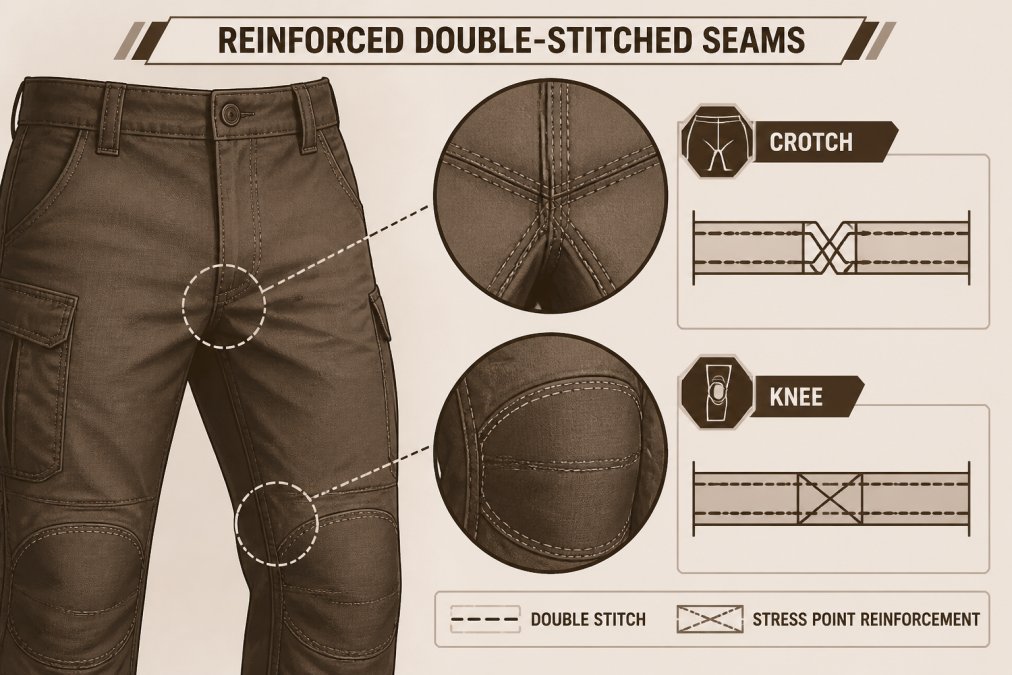
Stitching is where garments fail most frequently. Standard clothing uses single-needle stitching, while tactical apparel uses reinforced stitching, typically double or triple-needle stitching, that creates multiple parallel lines of thread. This redundancy means that even if one line of stitching fails, the garment remains intact.
Stress points, the crotch seam, underarms, shoulders, and knee areas, experience the most pulling and movement. Quality tactical apparel reinforces these points with additional stitching, bar tacks (small rectangular stitched areas that lock seams), or reinforcement patches. Tactical apparel uses thread with higher tensile strength than standard clothing thread. Polyester thread resists degradation from UV exposure and repeated washing better than cotton thread.
Gusseted Crotch and Articulated Knees
A gusseted crotch is a triangular or diamond-shaped panel of fabric inserted at the crotch seam. This design expands the fabric in the area where the most stress occurs during movement, reducing strain on seams and fabric while allowing greater range of motion.
Articulated knees feature a curved or angled panel design that accommodates the natural bend of the knee. Rather than a flat panel that bunches and strains when you kneel or crouch, an articulated knee panel moves with your leg. Both features are hallmarks of quality tactical apparel; cheap alternatives skip these design elements to reduce production costs.
Tactical Pants Features to Look For
Tactical pants experience constant stress from movement, kneeling, climbing, and carrying weight. Understanding what separates quality tactical pants from standard trousers helps you invest in gear that will actually last.
Pocket Placement and MOLLE Compatibility
Pocket placement in tactical pants prioritizes accessibility and load distribution. Cargo pockets are positioned on the thighs for quick access to tools or equipment. Quality tactical pants feature pockets with reinforced edges and stress-point stitching to handle repeated access. Pockets with boxed corners (stitched in a square pattern rather than a single diagonal line) distribute stress more effectively and resist tearing.
MOLLE (Modular Lightweight Load-carrying Equipment) webbing is a grid of stitched nylon strips that allows attachment of pouches, holsters, and other gear. MOLLE compatibility adds functionality without adding bulk.
DWR Coating and Weather Resistance
DWR (Durable Water Repellent) coating is a chemical treatment applied to fabric that causes water to bead and roll off rather than soaking in. This coating doesn't make fabric waterproof, but it provides temporary protection from rain, sweat, and splashes while allowing the fabric to breathe.
DWR coating degrades with washing and wear. Quality tactical apparel uses high-performance DWR treatments that last longer, typically 50-100 washes before noticeable degradation. Synthetic blends with higher nylon content naturally resist moisture better than cotton-dominant blends. DWR-treated tactical apparel dries faster, which extends garment lifespan by reducing moisture-related degradation and mildew growth.
How to Spot Fake Tactical Gear
The market for tactical apparel includes counterfeit products designed to mimic legitimate gear at lower prices. Learning to identify fake tactical gear protects you from wasting money on apparel that won't perform.
Authentic tactical apparel from reputable manufacturers shows consistent attention to detail. Stitching is even, straight, and reinforced at stress points. Seams are clean with no loose threads or irregular tension. Fabric feels substantial and has appropriate weight for its intended purpose.
Counterfeit tactical gear exhibits poor stitching quality: uneven tension, loose threads, and inconsistent stitch length. Seams may be single-stitched rather than reinforced. Stress points lack reinforcement or bar tacks. Graphics on counterfeit apparel crack and fade after just a few washes. Authentic gear from Nation Swag Designs uses high-quality printing methods that withstand repeated washing and wear.
Labels on counterfeit gear often contain spelling errors, inconsistent fonts, or poor printing quality. Price is a significant indicator: genuine durable tactical apparel costs more because quality materials and construction methods are more expensive. Verify purchases through official retailers to reduce the risk of receiving counterfeit products.
Fit, Function, and Range of Motion
Durability means nothing if a garment doesn't fit or restricts your movement. Quality tactical apparel balances durability with ergonomic fit that accommodates natural body movement while distributing stress evenly.
Ergonomic fit in tactical pants includes a cut that allows full range of motion without excess fabric. The waist should sit comfortably without riding up or down during movement. Thigh width should allow unrestricted leg movement without excess bagginess that creates stress points. Articulated knees and gusseted crotches contribute to functional fit by accommodating natural movement patterns.
Tactical shirts should allow full shoulder and arm movement without pulling or bunching. Heavy-weight fabric from trusted manufacturers maintains its shape through wear and washing, preventing the sagging or stretching that reduces functionality over time.
Maintenance and Long-Term Care for Tactical Apparel
How you care for tactical apparel directly impacts its lifespan and performance. Proper maintenance extends durability and preserves the integrity of graphics, fabric, and construction.
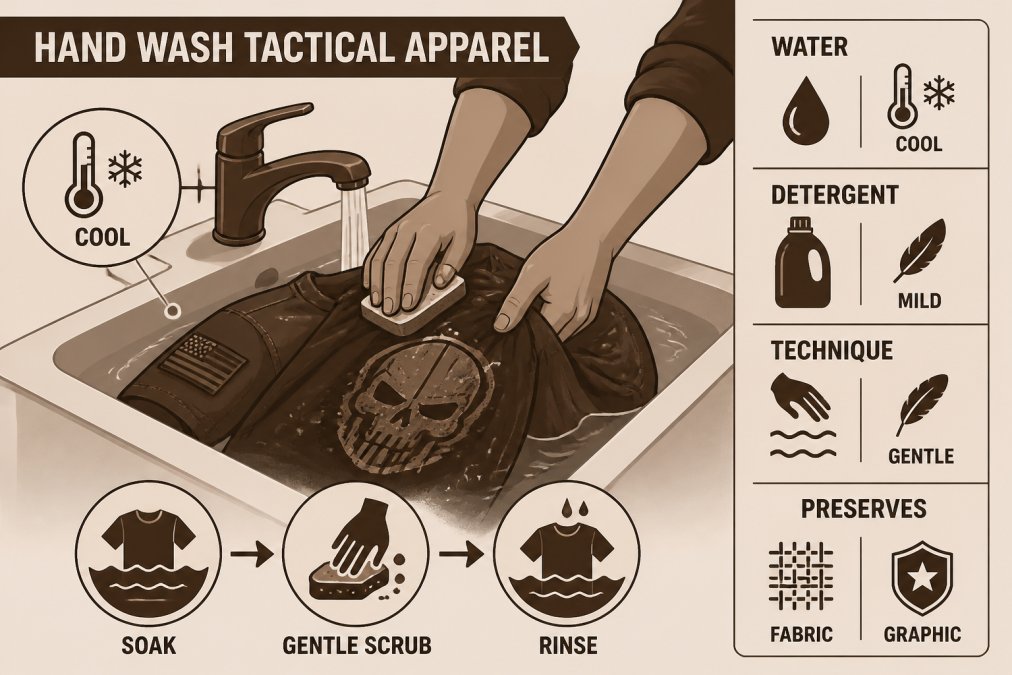
Wash tactical apparel in cool water using a gentle cycle. Hot water degrades synthetic fibers and causes fabric shrinkage. Turn garments inside out before washing to protect graphics and reduce surface abrasion. Use mild detergent formulated for synthetic fabrics and avoid bleach, which degrades fabric and causes discoloration.
Dry tactical apparel on a clothesline or lay flat to air dry. Machine drying generates heat that can damage synthetic fibers and cause shrinkage. Air drying preserves fabric integrity and extends garment lifespan significantly. Avoid dry cleaning unless absolutely necessary.
Inspect tactical apparel regularly for damage. Small tears or loose seams should be repaired immediately to prevent further damage. Store tactical apparel in a cool, dry location away from direct sunlight. Reapply DWR coating every 50-100 washes to maintain weather resistance.
Choosing durable tactical apparel requires understanding fabric composition, construction quality, and design features that separate quality gear from cheap alternatives. The investment in genuine tactical apparel from reputable manufacturers like Nation Swag Designs pays dividends through years of reliable performance. When you select gear built with reinforced stitching, quality synthetic blends, and thoughtful design features like gusseted crotches and articulated knees, you're investing in apparel that performs as hard as you do. Nation Swag Designs delivers durable tactical apparel with meaningful graphics and heavy-weight comfort from trusted manufacturers, ensuring your gear expresses your values while standing up to real-world wear. Get started with Nation Swag Designs and build a wardrobe that combines durability, comfort, and patriotic purpose.
| Feature | What It Means | Why It Matters |
|---|---|---|
| Ripstop fabric | Thicker threads create a grid that stops tears from spreading | Prevents small damage from becoming major failures |
| Double/triple stitching | Multiple parallel lines of thread at seams | Redundancy ensures seams hold even if one line fails |
| Gusseted crotch | Triangular fabric panel at stress point | Reduces seam strain and increases range of motion |
| Articulated knees | Curved panel design that moves with your leg | Prevents bunching and distributes stress during movement |
| DWR coating | Water-repellent chemical treatment | Provides temporary weather protection and extends lifespan |
| Reinforced stress points | Bar tacks and extra stitching at high-wear areas | Prevents seam splitting during physical activity |
| MIL-SPEC standards | Military-grade testing benchmarks | Predicts real-world durability through rigorous testing |
| Heavy-weight fabric | Higher ounces per square yard | Increases abrasion resistance and longevity |
Frequently Asked Questions
What materials make tactical clothing durable?
Ripstop fabric, synthetic blends, and MIL-SPEC materials provide superior durability. Ripstop's woven grid pattern prevents tears from spreading, while synthetic blends offer abrasion resistance and quick-drying properties. Look for reinforced stitching at stress points, double or triple stitching at seams, knees, and pockets indicates quality construction that withstands field performance demands.
How can you tell if tactical gear is high quality?
Examine the fabric weight (heavier generally means more durable), check for reinforced stitching at all stress points, and look for gusseted crotches and articulated knees. Quality tactical apparel features DWR coating for weather resistance and load-bearing utility features like MOLLE compatibility. Inspect seams closely, they should be tight and evenly spaced, not loose or uneven.
How do I maintain tactical clothing to ensure longevity?
Wash tactical apparel in cold water with mild detergent, avoiding bleach and fabric softeners that degrade synthetic fibers. Air dry rather than using high heat, which damages DWR coatings and elastic. Store in a cool, dry place away from direct sunlight. Check seams and reinforced areas regularly for wear, and address small tears immediately to prevent spreading.
What's the difference between tactical and standard clothing?
Tactical apparel uses reinforced construction, MIL-SPEC materials, and functional design elements like gusseted crotches, articulated knees, and load-bearing seams. Standard clothing prioritizes comfort and style over durability. Tactical gear includes utility features such as concealed carry compatibility, MOLLE webbing, and multiple pockets positioned for tactical functionality. The ergonomic fit supports range of motion during physical activity and field performance.
This article was written using GrandRanker